



From AI Slop to Healthcare: What’s New in AP Style
By John Elsasser
November-December 2026
One word or two? For years, “health care” has been two words in AP style. Not anymore.
That change was among the updates discussed during the “What’s New in AP Style” workshop at PRSA’s ICON 2026 in Orlando on Oct. 19.
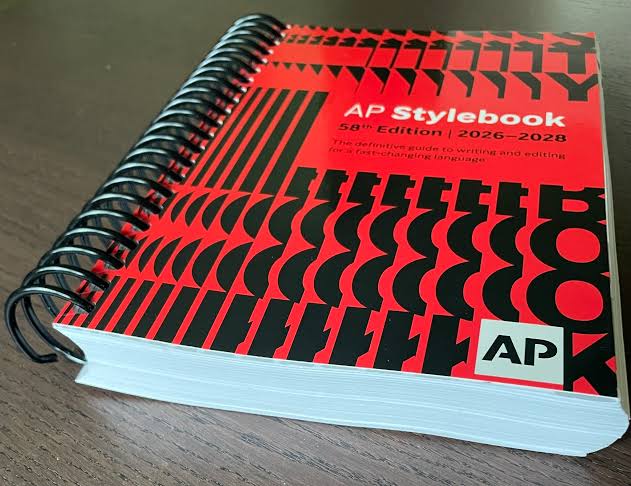
Following the session, I spoke with Anna Jo Bratton, editor of the newly published 58th edition of the AP Stylebook, and Colleen Newvine, the Stylebook’s product manager, about evolving language rules, new guidance on artificial intelligence and the challenges of maintaining clear, accurate writing.
Our conversation also explored what journalists and public relations professionals have in common — particularly as both contend with AI-generated content, shrinking resources and the continuing need for good writing.
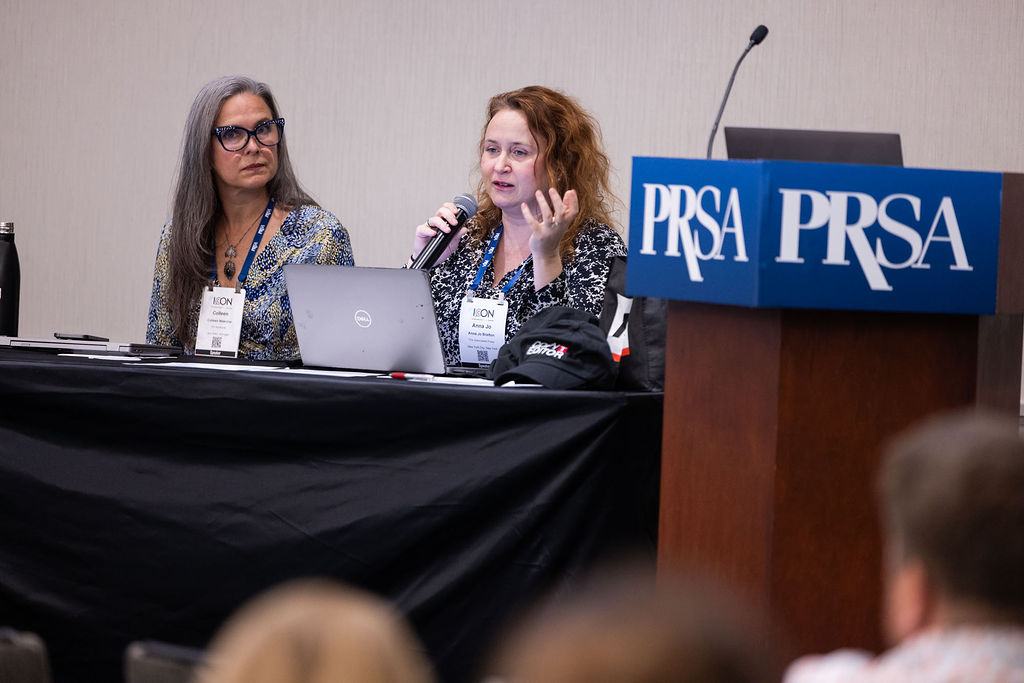
As Bratton (below right with Newvine) put it, “We’re all on the same side in that battle.”
Can you expand on the AP’s new AI guidance?
Anna Jo Bratton: We have two pieces of AI guidance. We have the chapter that’s in the book, and we have added how to define terms if you’re writing a story or a press release or whatever about AI. Here are some questions to ask. And that’s where we added “AI slop,” “vibe coding,” and “compute,” those terms.
AI policy is the newsest area that we have. It’s based on the AP’s internal policy ... how we will use AI, how we won’t use it, and how we disclose it.
The idea is that if you’re a small shop and you don’t have your own policy, this is something that you can start from. You can take the pieces of it that make sense. It’s very comprehensive, but I think it could be used in lots of different ways, for a small newspaper, a TV station or a government agency.
I’m trying to keep my emotions out of this question, but “health care.” It’s two words. C’mon. But according to the AP, it is one word now?
Bratton: As of May, yes. People gasped when I said it — happy gasps, and also angry.
Everyone has feelings. No one has said, “Oh, interesting.” Everyone either has said, “Thank you so much, finally I’m right,” or “You’ve ruined my life. And now I have to edit 70,000 pages of copy.”
I think 20 years ago, if you used healthcare as one word, it would look like bureaucratese. It isn’t the case anymore. It has become a word in its own right. Healthcare means something different than health plus care.
We’ve considered it for so long that it felt like the time to move forward.
There are still some things to work out, like mental healthcare. That was a tricky one. But I think it was just time. It entered the lexicon long ago; we’ve all been arguing about it ever since.
Maybe a future Stylebook editor will undo my work, but I don’t think you can do that.
Colleen Newvine: I can think of a couple of things where we got enough feedback that we reconsidered.
I often describe the Stylebook committee as operating like the Supreme Court. They take the arguments; they deliver a decision. But they’re also thinking about setting precedents.
If healthcare now is one word, that’s the precedent. Then what about mental healthcare? Or how do you think about skin care or lawn care? You also mentioned daycare, childcare, jumpscare and primetime. Are those new?
Bratton: Yep, those were added, too.
Jumpscare and primetime came from our entertainment staff, who are seeing all of the big entertainment media companies using them as one word.
And “self-care” still has a hyphen?
Bratton: And self-care still has a hyphen.
You mentioned that journalists and PR professionals are all in this together. Can you expand on that, particularly when it comes to the importance of good writing?
Bratton: I feel we’re all fighting a battle against the loosening of language rules so much that they don’t mean anything anymore. We’re all on the same side in that battle.
At the same time, I think we’re all fighting against all of the AI slop out there and really trying to figure out how to communicate clearly and effectively.
If I get a pitch from someone who has taken the time to say, “I know that we’re the first company to do this, I know that the poll that I’m pitching you follows the AP Style rules for what the standards for a poll should be,” it does what they’re trying to do, which is to pitch their product or their poll. But it also follows clarity, not just puffing something up or making it sound better than it is.
I think that’s where journalists and PR folks can come together. If you have a relationship with a journalist and come to them with pitches you know are on their beat, and you’ve done enough research to know they’re interesting, it can be a partnership rather than spamming someone with a fluffy note.
We can agree that my job is different from your job, which is different from Colleen’s job. But if we can all agree on similar principles of good writing, clarity and honesty, then we can go from there.
We need to stop using words to hide meaning. We need to use our words to be clear, accurate and honest. Then we can all meet those needs together.
Colleen, what are PRSA members asking about when they visit the AP booth at ICON?
Newvine: We haven’t gotten nearly as many questions about Oxford commas this year.
We have had quite a few people come by to talk about healthcare. I would say 90% are thrilled, and 10% want to register their concerns.
More people are coming to the booth this year talking about, “What are the tools that you have that are going to help my campaign follow AP Style? I have rookie writers who didn’t go to journalism school. I am editing copy from people who write from their departments, and they weren’t trained as writers at all. What tools do you have?”
People have been coming by to think about how we can help them tell their stories clearly and concisely.
We haven’t had that drumbeat of “When are you taking the hyphen out of e-mail?” or “I hate you for saying ‘more than’ and ‘over’ are the same thing.”
It’s more just, “Please, just help me do my job.”
Bratton: I think that’s where I get the “We’re all in this together.”
Everybody is doing more with less. Maybe you are the one person in your shop trying to teach everyone else. Or maybe you’re a journalist, and you’re the only editor, where you’re writing and editing yourself.
People want that connection, somebody else who cares about good writing and communication.
That’s why I like coming to conferences: I care deeply, and it’s nice to see that good writing isn’t the end of the world. We’re still out there fighting the good fight. And there are a lot of people who are with us.
Newvine: We’ve had a lot of people come by to get selfies with Anna Jo. They want her signature in their Stylebooks.
I think they’re also coming by to do that fist bump of, “You see me, I see you. We are in this together.”
AP Stylebook Benefits for PRSA Members
PRSA members receive a 20% discount on several of our AP Stylebook products:
- One single-user subscription to the AP Stylebook Online
- One single-user subscription to the AP StyleGuard Pro
- One registration for the AP Stylebook Workshop
Visit www.apstylebook.com/prsa for details.