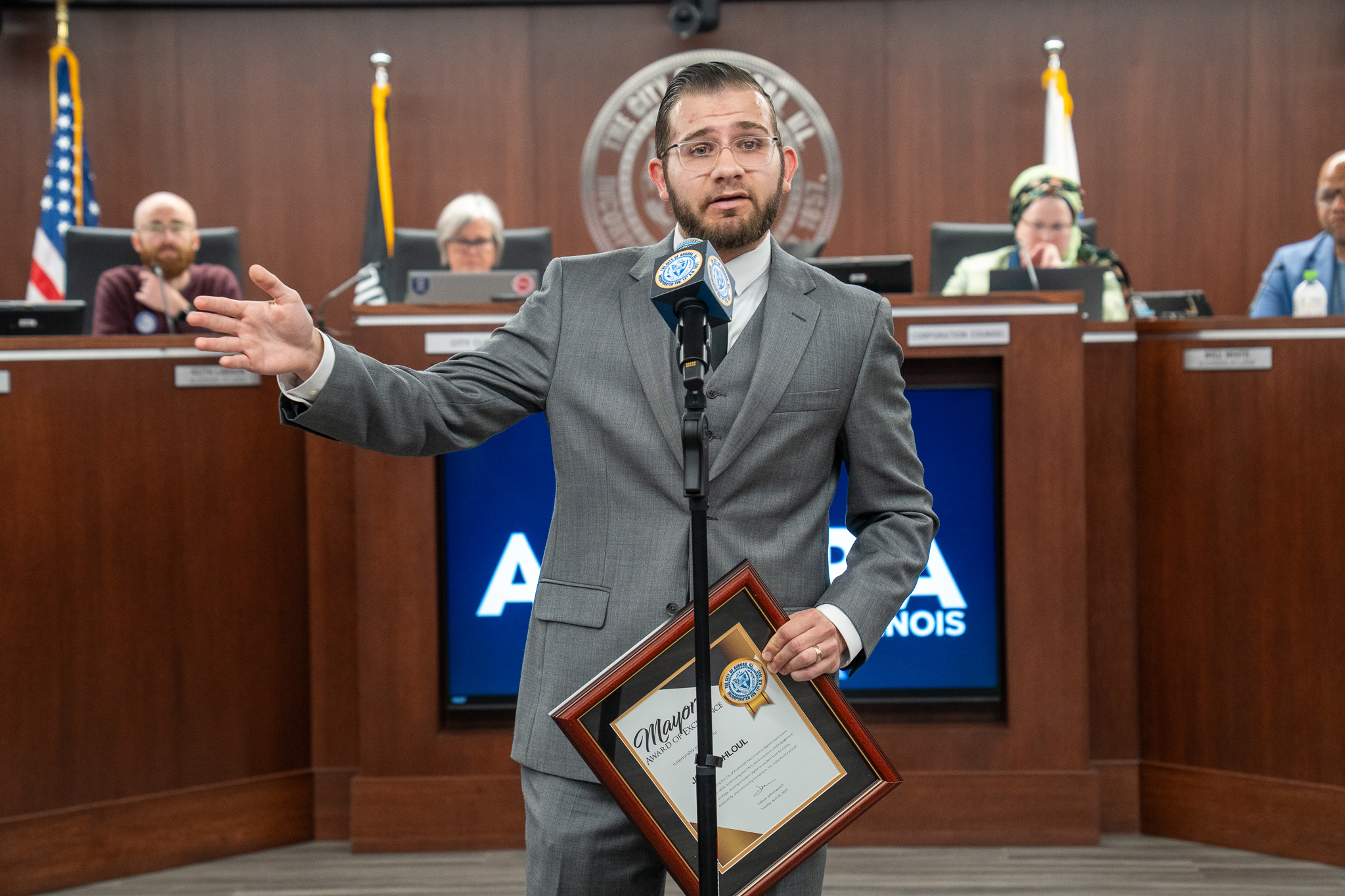




From the Press Box to City Hall
By John Elsasser
August 2026
Join Jon Zaghloul on the next Strategies & Tactics Live on LinkedIn: Aug. 26, 1 p.m. ET.
At 26, PRSA member Jon Zaghloul has already built a sports media company, hosted syndicated radio and television programs, and risen from digital communications coordinator to director of communications for the City of Aurora, Ill., in just over three years.
Here, he discusses the lessons he learned as a young entrepreneur, the evolution of local government comms and why listening to residents is still the key to engaging communities.
You built a sports media company, Sports Talk Chicago, when you were 13 years old. What lessons from that experience still influence how you communicate today?
Building out my sports media company from a simple website into a syndicated radio and television show with a robust YouTube following and noted social media presence taught me countless lessons about the importance of communication.
Chiefly, I learned that hard work, dedication, and persistence will always pay off. By teaching myself some core principles of communication, including how to write a media release, maintain relationships, and solicit media coverage, I was able to properly prepare for a greater role within the industry.
Additionally, with my experience interviewing athletes, celebrities, and political figures, all of whom agreed to appear on a program hosted by a teenager, I learned that I should never be afraid to ask questions. As Scripture states, if you do not ask, you will not receive. My company taught me that putting in an ask, at an appropriate time, can lead to a yes, even in the most unlikely of situations.
Given your background in sports broadcasting and media entrepreneurship, how did the transition to government communications come about?
I have always maintained an inherent desire to help others. Even during my time in sports media, I frequently took opportunities to mentor young men and women trying to break into the industry. I also appeared on a variety of programs to serve as a guest panelist. That desire to help others became more of a personal mission as I grew in my professional career. I was looking for an opportunity to better utilize my talents toward fulfilling this goal.
That’s when the world of government communications was introduced to me. I was truly excited about the idea of helping to tell the story of a community, while spreading positivity and cultivating a sense of hometown pride.
When a role for the City of Aurora became available, I jumped at the opportunity, and I have been happily employed there ever since.
You joined Aurora in December 2022 as a digital communications coordinator and now serve as director of communications. What experiences during that progression shaped your approach to leadership?
I have had the privilege and honor of learning from and working with some of the most talented municipal communicators in the country throughout my tenure in Aurora.
I have also been a part of significant events in my three-plus years in Aurora, as I helped to transform the City’s digital communications and engagement strategy through the launch of a new website, engagement platform, and communications software. I have worked for two different administrations that each had distinct visions for Aurora.
Through each of these experiences, I have learned that all roads lead back to our residents. By operating with a resident-first mindset, I can work with our talented team to craft effective communications strategies that engage and uplift the community.
Aurora launched a new website, engagement platform and communications infrastructure in roughly 13 months. How did you, the communications team and city leadership keep a project of that scale moving forward?
Transforming the City of Aurora’s digital communications and engagement strategy was far from being a one-man job. A project of that magnitude required teamwork on every level and, fortunately, it was apparent from day one that each department and division involved was all-in. The City’s Project Management Office, which serves as a division within the Information Technology Department, was critical in steering the ship to complete the work on time.
Additionally, a current member of the City’s Brand and Marketing Division, who was an intern at the time, was invaluable to the project’s success, as he learned the new software quickly and assisted me in finishing the job. Senior leadership, including the Mayor’s Office, our Chief Communications and Marketing Officer, and other City department heads, also voiced great support for the initiative, which greatly helped in changing the way Aurora residents digitally interacted with their local government.
One theme that runs throughout your work is listening. How did resident feedback shape the decisions your team made during the transformation?
Resident feedback was the primary mechanism shaping decisions during Aurora’s digital transformation. The City asked residents to provide feedback on the previous website, plus engaged the public in adding its thoughts surrounding the navigation and design of the new website’s homepage.
The ultimate goal was to build a platform that promoted digital engagement and two-way communication between the City and residents. Due to residents’ feedback and their willingness to critique, we were able to succeed in our objective, delivering a quality product that promotes accessibility and encourages participation.
Your communications survey generated the highest participation in city history. Were there any findings that surprised you or changed the way the city communicates with residents?
Residents were generally pleased with the City’s current communications strategy, yet offered two pieces of critical feedback that helped us to reach more of our community. Respondents advocated for the return of a quarterly print newsletter and also encouraged the City to establish a Nextdoor account.
We followed suit on both recommendations, and the results have been spectacular. Now, we have been able to reach more residents than ever before, promoting both accessibility and enhanced community engagement.
Looking ahead, what do you see as the biggest opportunities for communicators working in local government?
As the traditional media landscape continues to evolve, I have noticed a rise in local governments opting to act as their own “newsroom,” employing communications teams to disseminate information in both print and digital formats. This is an intelligent way to engage more residents.
Over time, I expect more municipalities to invest in community storytelling, which will lead to additional municipal communications job opportunities down the road. For local government communicators, it is important to operate with this sort of mindset. We are the “news reporters” for our municipalities, doing our best each and every day to keep the community informed about what’s taking place. It is encouraging to see more local governments recognize the value of communications and public information.
I only foresee our field growing, and I am encouraged by the number of quality communicators who work hard to promote the positivity that takes place in their respective communities.