




Leading Through the Chaos
By Ken Jacobs
August 2026
I can’t remember a time when leading a PR or communications team was harder than it is right now.
The pace of change, the relentless news cycle, the pressure to do more with less, the threat of layoffs and restructurings, the anxiety rippling through your team. It’s a lot. And through all of it, your people are watching you, looking for the clarity and steadiness you may not always feel.
Here’s what I’ve learned from coaching communications leaders through multiple rounds of turbulence over the years: Chaos is no longer the exception. It’s the environment. The question isn’t whether you’ll have to lead through it. The question is how.
I recently had the privilege of presenting “Leading Through the Chaos” for PRSA Learning and at PRSA FutureCon. I offered 15 actions leaders can take to lead more effectively during these times, organized across three areas: leading yourself, leading your team, and managing your energy. Here are five you can do immediately:
Accept that leadership is a 2-part choice.
This is the single most powerful thing you can do right now; it won’t cost you a dime or take more than 30 seconds. Make a deliberate, conscious choice to lead people. To not just manage projects, budgets, and deadlines, but lead and inspire human beings.
What surprises many leaders is that leadership is actually a two-part choice. The first part is yours: your conscious decision not just to be a superb PR practitioner or manager, but to lean in and lead human beings, with all the frustration and ultimately fulfillment that comes with that.
The second part belongs to your team: Their conscious decision to follow you. Or not. Don’t assume that because people report to you, they’re following you. They may show up each day, do the work, and check off the to-do list. But that’s transactional. That’s not choosing to follow you.
Uncertain times call for empowered, engaged followers. Choose, deliberately and daily, to be the kind of leader your team chooses to follow.
Get feedback on your leadership.
Research by Zenger and Folkman, which studied 50,000 executives worldwide, found that leaders who actively seek feedback from others score at the 86th percentile in overall leadership effectiveness. That’s a remarkable finding.
And its implication may be more remarkable: the mere act of asking for feedback increases your followers’ perception of you as a more effective leader.
I know why most leaders don’t ask for feedback on leadership performance. They’re afraid of what they’ll hear. That fear is understandable.
Here are two ways to start: First, close your next one-on-one by asking: “What are three things I could do differently that would make your work easier or more meaningful?” Second, reach out to a trusted peer and ask for their honest, unfiltered read on how you’re coming across right now. Then do the hard part: Listen without defending. Don’t explain. Don’t justify. Just listen, thank them, and act on what you hear.
Be decisive.
In chaotic times, many leaders fall into what I call paralysis by analysis: They wait for more information, more time, and more certainty before making a call. I understand the impulse.
But here’s what I’ve observed over nearly two decades of coaching communications leaders: Delaying a decision IS making a decision. You’re deciding that the status quo is acceptable. And in times like these, the status quo probably isn’t.
A wrong decision is almost always preferable to delay. You can course-correct from a wrong decision. You can’t course-correct from delay. Your team is watching how you respond, and decisiveness, even imperfect decisiveness, builds more trust than prolonged hesitation.
So make the call. Communicate it clearly. Adjust if needed. But decide. Here’s a practical starting point: Identify the decision you’ve been putting off the longest. Make it this week.
Tune into your team.
According to Gallup, 64% of employees globally feel disengaged, with only 20% truly engaged. The primary drivers of engagement? Feeling seen, heard, and valued. Having clear goals. Being trusted with meaningful work. Knowing their leader genuinely cares about them as human beings.
In chaotic times, your people may be carrying fears they’re not sharing with you, fears about their jobs, their families, and the future. Some of your team members may have lived through previous downturns. For others, this level of turbulence is entirely new.
Meet with your people more frequently than you think you need to. When you do, talk about more than the work. Ask how they’re really doing. Pay attention not just to what they say but how they say it. Are they quieter than usual? Less engaged? If they seem uncomfortable, probe gently. You don’t have to have all the answers. Sometimes simply being truly seen by their leader is the most powerful thing a person can experience. This isn’t a soft metric. It’s a performance metric.
Know that this too shall pass.
I want to leave you with something that might sound like a platitude but is, in fact, a historical fact.
You, your organization, and our profession have survived recessions, pandemics, technological disruptions and cultural upheavals. Every period of significant chaos in our industry’s history has eventually given way to stability, growth and new opportunity. Not immediately. Not painlessly. But every single time, it passed.
That’s not a reason to be passive. It’s a reason to share grounded hope with your team. Not false optimism, but confidence rooted in evidence. Build your resilience now, while the pressure is on, rather than waiting for a calmer moment that may not arrive soon.
The leaders who come through strongest aren’t those who simply endured the chaos. They’re the ones who used it to become more self-aware, more connected to their teams, and more deliberate about how they lead.
That kind of leader is built through choices like the five above.
Start with one.
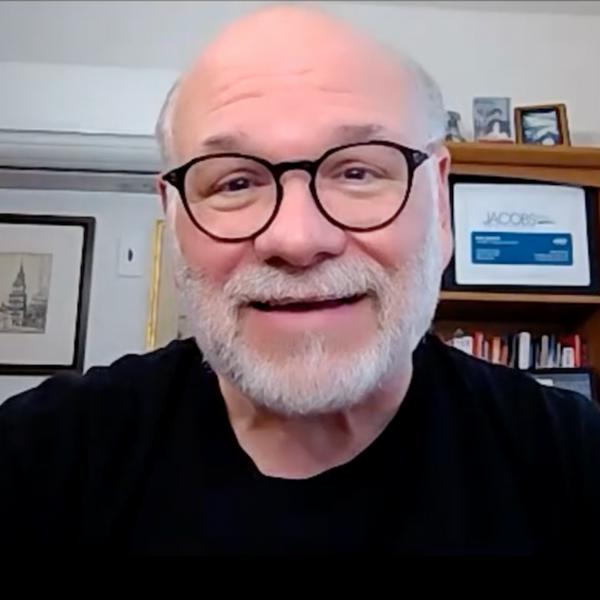
Ken Jacobs
Ken Jacobs is principal of Jacobs Consulting & Executive Coaching. Visit his website (www.jacobscomm.com) and contact him by email (ken@jacobscomm.com). He is a Professional Certified Coach (PCC).