



AAP Wins 2026 Best of Silver Anvil for Immunization Initiative
June-July 2026
Around the world, immunization efforts have saved an estimated 154 million lives over the past 50 years, according to a 2024 World Health Organization study. The vast majority of the lives saved by vaccines were those of infants.
The study called immunization one of the most significant public-health interventions of the modern era. Vaccines have helped eradicate or dramatically reduce diseases that once posed major threats to children worldwide.
Today, however, childhood vaccination rates in the United States have declined. According to the American Academy of Pediatrics (AAP), less than 93% of kindergartners have received state-required vaccines, down from a pre-pandemic rate of 95% — the threshold commonly associated with preventing outbreaks of diseases such as measles.
In response, the AAP developed its Vaccine Confidence initiative, a national public awareness effort designed to strengthen trust in childhood immunizations and counter misinformation and strengthen trust in vaccine safety and efficacy.
The work recently earned PRSA’s 2026 Best of Silver Anvil Award — the profession’s highest honor for public relations programming — recognizing communications programs that demonstrate exceptional strategic execution, measurable results and meaningful societal impact.
Building trust through research
The initiative combined evidence-based messaging, social listening, targeted media outreach and rapid-response communications efforts to support informed decision-making among families and communities.
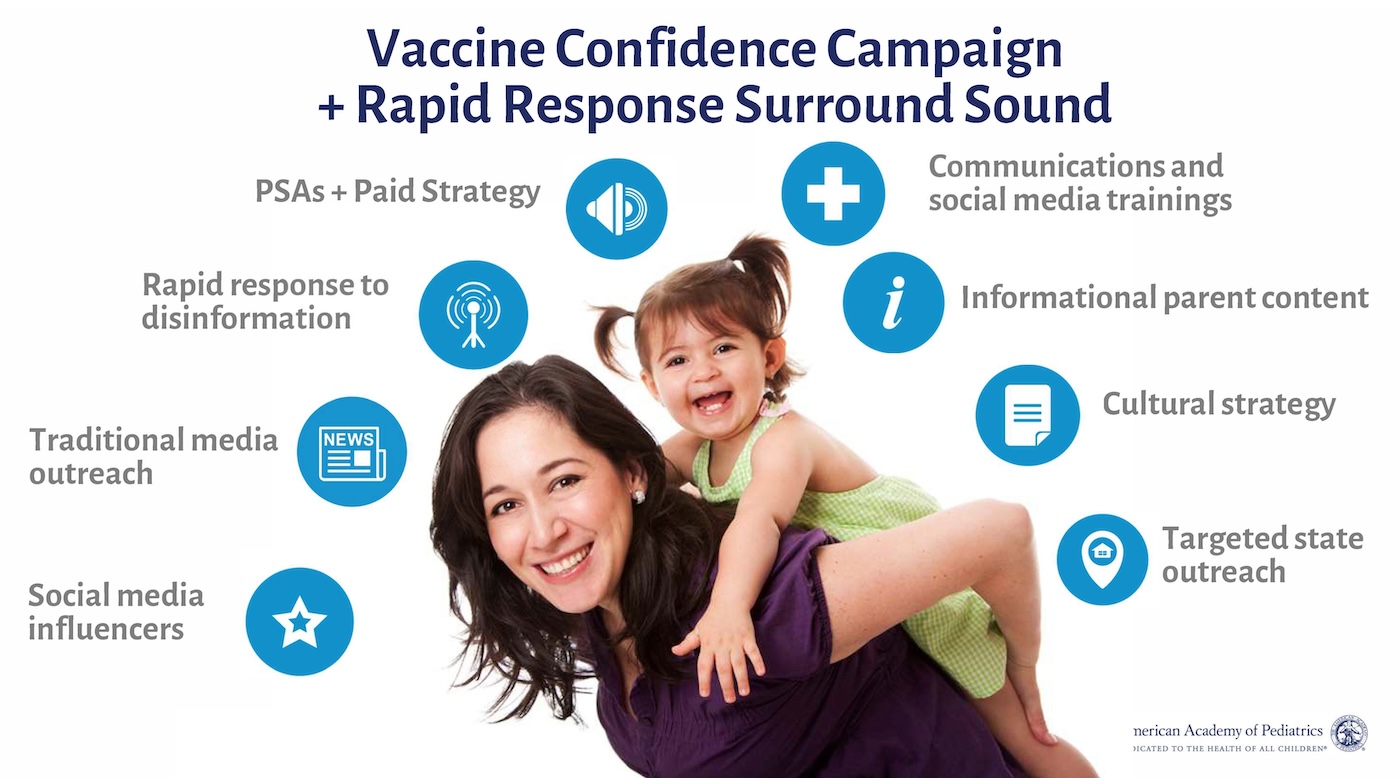
Leveraging earned, paid and shared media, along with pediatrician storytelling and digital outreach, the strategy sought to elevate trusted medical voices while addressing the growing influence of misinformation in the broader information ecosystem.
The effort was heavily informed by research and message testing. To support the work, the AAP partnered with the Frameworks Institute, a nonprofit research organization specializing in social science and message framing. The collaboration helped shape evidence-based messaging strategies that emphasized the collective benefits of immunization rather than individual fear-based appeals.
Frameworks conducted literature reviews, audience analysis and platform research to better understand how different communities consume and respond to vaccine information. The research also informed a Spanish-language messaging strategy, ensuring materials resonated with Spanish-speaking audiences in culturally relevant ways.
AAP also partnered with UpSwing, a research and strategy firm that conducted social listening to better understand online narratives about vaccines. Reports tracked conversations from both those undermining vaccine confidence and those supporting immunization efforts, helping communicators identify emerging misinformation trends and adjust messaging in real time.
Understanding vaccine hesitancy
Research and social listening also helped identify a target audience segment known as “Top Persuadable Parents” — roughly 2.7 million vaccine-hesitant parents considered most likely to respond positively to evidence-based vaccine messaging. The organization developed tailored outreach strategies designed specifically to engage this audience through trusted voices and accessible language.
Supported by a $2 million budget and a fully integrated national communications plan, the initiative focused on amplifying trusted pediatric voices, expanding message reach, strengthening vaccine-messenger networks and supporting state-level outreach efforts.
The effort established four primary objectives: expanding the reach of trusted pediatric voices through media placements; increasing visibility for evidence-based vaccine messaging; strengthening a nationwide network of vaccine advocates and messengers; and supporting outreach efforts through AAP state chapters.
Activating a national campaign
To execute the strategy, the AAP assembled a broad network of communications and research partners. In addition to Frameworks and UpSwing, the organization partnered with Precision Strategies for rapid-response communications, paid media and content creation, and M. Harris & Kern for message development, public service announcements and customized state chapter content.
Earned-media placements positioned pediatricians as trusted experts, while television and radio PSAs helped extend visibility nationally. The organization also worked with influencers to amplify pro-vaccine messaging across social media platforms in both English and Spanish.
To reach parents directly, the AAP created articles, webinars and toolkits for AAP.org and HealthyChildren.org. It also produced short-form videos for Meta, YouTube and TikTok, including an “Ages and Stages” series designed to help parents navigate childhood vaccinations and development milestones.
Materials were adapted across web, video, press and social channels to better connect with diverse audiences. Rapid-response graphics and customized content packages also allowed AAP state chapters to localize messaging and respond to emerging issues within their own communities.
Exceeding campaign benchmarks
During its first phase, the initiative exceeded all major benchmarks. It generated more than 60,000 media placements with an estimated reach of more than 169 million. Nearly all coverage came through earned media, reflecting strong engagement with reporters and news outlets.
The Rapid Response Hub proved especially valuable during periods of heightened public debate over vaccines, helping the organization respond quickly to misinformation surges and maintain visibility for evidence-based messaging.
Messaging across social media, paid ads, public service announcements and web channels delivered more than 216 million impressions. Social media content alone generated more than 109 million impressions and a 6% engagement rate, indicating strong audience engagement with the material.
The initiative also trained more than 3,100 pediatricians, clinicians and advocates through conferences, workshops, coalition calls and a tele-mentoring program designed to strengthen confidence and communication skills related to vaccine outreach.
One component, the Vaccine Confidence Media Skills ECHO program, trained 31 participants through six educational sessions focused on improving media engagement and public communication skills related to immunization.
Five AAP chapters implemented advocacy plans supported by tailored strategies, technical assistance and paid advertising. A Meta advertising program through these chapters generated nearly 19 million views across priority states, including Hawaii and Florida.
Expanding the reach of trusted voices
The AAP also partnered with M. Harris & Kern, a Chicago-based consultancy, to create public service announcements and educational materials encouraging parents to vaccinate their children. One PSA effort framed parents as “superheroes” protecting children from dangerous diseases through immunization.
Ultimately, the initiative demonstrated how integrated communications, research-driven messaging and trusted medical voices can work together to address one of the most pressing public-health communication challenges facing families and communities today.