



From Oxford Commas to AI: Inside the Evolving AP Stylebook
By John Elsasser and Amy Jacques
February 2026
Explore bonus content and video clips from the interview at PRsay.
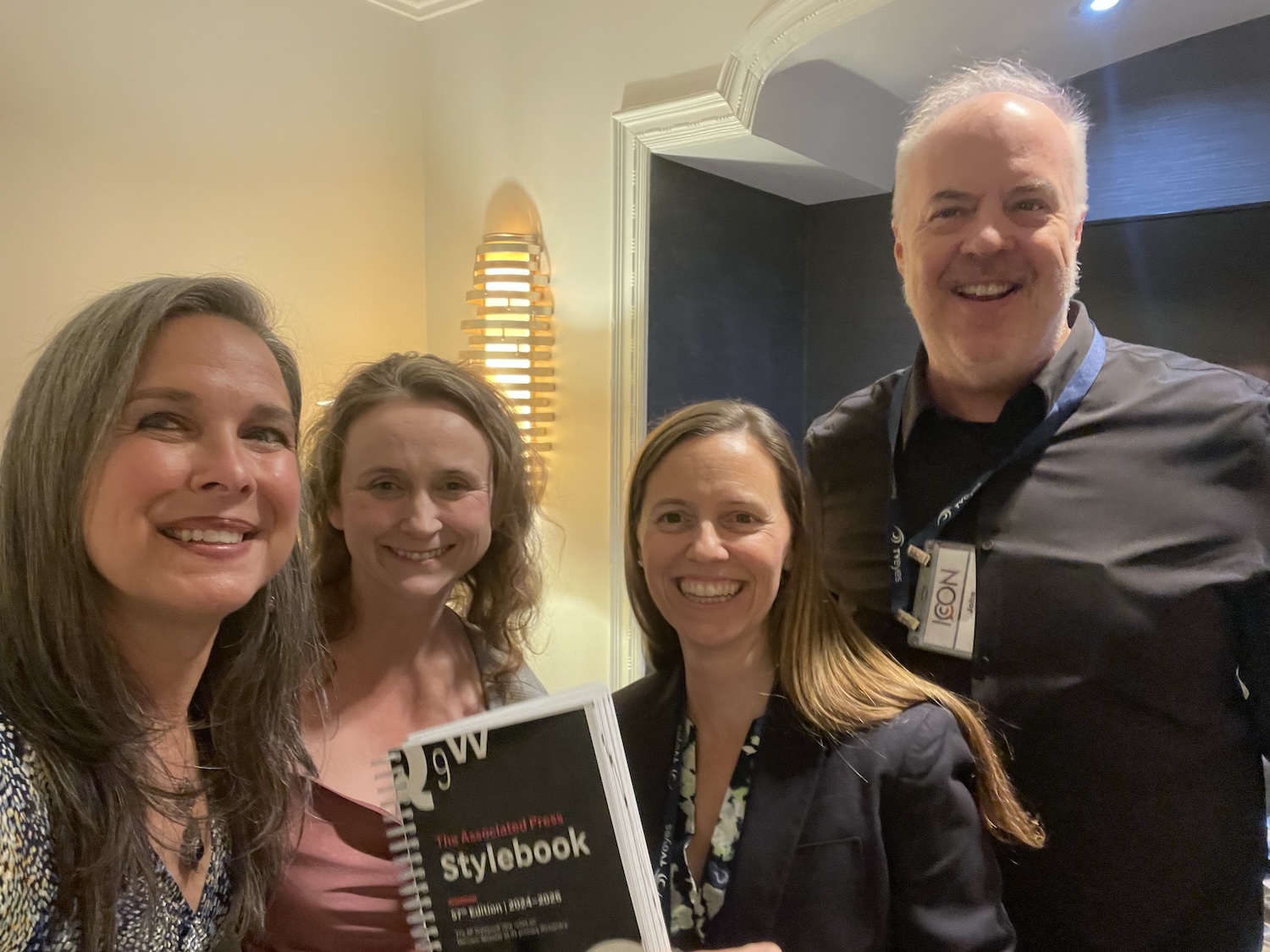
At PRSA’s ICON 2025 in Washington, D.C., this past October, PRSA’s editorial team sat down with Anna Jo Bratton, editor of The Associated Press Stylebook, and Colleen Newvine, product manager for The Associated Press Stylebook, to discuss how style guidance is developed — and how it’s evolving as language, news cycles and AI move faster than ever.
From perennial debates like the Oxford comma to high-stakes questions of accuracy and fairness, they share what they’re hearing from writers right now — and what’s next for the Stylebook.
John Elsasser: Anna Jo, how did you start working at The Associated Press?
Anna Jo Bratton: I’ve been at the AP for almost 20 years. I started in 2007 as a political reporter in Nebraska. Since then, I’ve been an editor in a lot of different roles.
My last job before the Stylebook job was as enterprise editor for the AP. I was working on long-term projects and longer form writing. Now I’ve been the Stylebook editor for six or seven months. And it’s very different from any other job I’ve had.
Elsasser: Colleen, can you tell us about your AP experience?
Colleen Newvine: I’ve been a reporter and editor going back to my elementary school newspaper. My first introduction to The AP Stylebook was on my high school newspaper… I started at the AP almost 20 years ago.
I’ve been working on the Stylebook almost that entire time. I’m still learning things about The AP Stylebook, and never realized back in high school that I would get to be working on this thing that’s so iconic. It’s great.
Elsasser: Anna Jo, how did you come to be on the Stylebook committee?
Bratton: People realized quickly that I care deeply about words and how they’re used, and the evolution of language. I was asked to be on the Stylebook committee, which I did for more than 10 years. We have a committee now of six people from all over the company
But most of my experience is as a journalist, as an editor. I understand editors and writers who are having to use AP Style in the real world, not just as an idea or a premise.
Amy Jacques: Can you talk about how you decide to send an email about style updates? And with social media, AI, and all the new slang, how are you making those decisions?
Bratton: I spend a lot of time talking to outside sources. I talk to our journalists throughout the company. They live all over the world and work in different departments — business, sports. They have an expertise. But also people outside the company, to make sure I’m keeping up with how people are using language. That has changed our processes.
As far as communication about AP Style updates, part of that is asking people for input. We have a newsletter. We have our social accounts. And we’re regularly asking people, “If we made this change, how would it impact you?” Or “If we were to add this rule, would that be helpful? If we took this away, is that not helpful?” It’s become much more of a dialogue.
I always joke that the Stylebook is not a bunch of people sitting around in a smoke-filled room, distributing by fiat. But [it’s] trying to absorb how language is being used, and then giving people guidance so they can be clear and consistent in their writing.
Elsasser: In terms of breaking news, perhaps there’s a region of the world that may not be as familiar to readers, to editors. How do you quickly make those changes, or suggestions, in a breaking-news cycle?
Bratton: We do topical guides, sometimes. When the war in Ukraine started, it was a place with a lot of locations that people might not have known how to name. We quickly put out a topical guide to try and help people who were covering that.
Elsasser: There was a time when new editions of “The AP Stylebook” would come out once a year, and that’s when those changes would be reflected. But now with the topical-guide updates, how have you seen the frequency of, and the means by which, AP updates its style guidance evolve?
Newvine: The change in the speed and intensity of language evolution. When I got involved in the Stylebook, one of the most controversial things we did was to say that “more than” and “over” mean the same thing.
The world has changed so much, where the Stylebook is responding to big, important, charged topics. Deciding if something is a war or not is a big deal. That’s really evolved, and the Stylebook has kept up with the fact that language is so important. And we need to be helping our internal journalists keep up with that, and the customers of the Stylebook.
Jacques: Discuss your partnership with Webster’s dictionary. If we can’t find something in The Associated Press Stylebook, are we to go there instead, to find style guidance?
Newvine: We made the switch about a year and a half ago for Merriam-Webster to be our primary dictionary. As far as we could tell in our research, Webster’s New World College Dictionary had been the official dictionary of the AP since the dawn of time.
It was a big deal to make that change, but it was important, because Merriam-Webster at this point is the only dictionary in the U.S. with full-time staff keeping up with changes in language, which is important to us. And they’ve been fantastic partners. If we want to reach out to someone and say, “What are lexicographers thinking about this word, this phrase; how are things changing?” we now have that collaboration.
Elsasser: We follow AP Style at Strategies & Tactics, as do many PR firms, brands and content creators. But where do you draw the line between creative voice and correct style? At what point is it OK for someone to bend the rules?
Bratton: It is about knowing your audience and connecting with them. I always say, “If you follow every AP Style rule and every grammatical rule and your punctuation is perfect, but your audience doesn’t understand what you’re saying or doesn’t connect with it, then you’ve failed at doing it the right way.”
There are definitely times when breaking the rules makes sense. But I think being consistent is important. You may decide that in your business, you’re going to capitalize all the department names. As long as you capitalize all of them, that’s fine. My pet peeve is if it’s inconsistent — if one is capitalized and another isn’t.
Sometimes you’re writing for an audience and you have 30 seconds to grab their attention online, and so you’re going to start a new language to try to grab them.
Or maybe you’re writing for the PRSA website, where everybody already cares about the subject and already knows something about it, and you’re going to write that in a different way.
I have let reporters get away with some casual writing, or with narrative writing that doesn’t exactly follow AP Style. But because they’re doing it in a consistent and intentional way, it works and it draws readers in. And that’s what’s important. You’re drawing people in and you are clearly communicating, without any misunderstanding.
Elsasser: You are an exhibitor at PRSA’s ICON 2025. What kinds of queries are you getting from people, and what conversations are you having with PRSA members and attendees here?
Bratton: We’ve talked a lot about things like datelines and why, with some cities, you can use them without including the [U.S. state or foreign] country. We also have people ask about the Oxford comma.
Newvine: Over and over and over again.
Bratton: And I will just say, AP does not ban the Oxford comma. We don’t. We say in a simple series, if it’s not necessary, don’t use it. But if there’s any chance of being misunderstood, you should use the final comma in the series.
Jacques: Do you field “Ask the Editor” questions? Are you receiving a lot of those?
Bratton: I do. I often see people asking for guidance on the same thing. I try and give guidance. If it’s something that we’ve never answered before, then I’m more likely to spend the time researching and trying to come up with an answer. Sometimes, the easy ones, I can just knock out. It’s a way for me to know what people are curious about, [which] changes from week to week, depending on the news. And while I know what we’re interested in covering at the AP, it helps me to hear from our broader community of writers and figure out what people want to know.
Newvine: It helps bubble up some of those things that either aren’t in there or aren’t clear. For example, you won’t be surprised [that] we get a lot of questions about the Oxford comma. There’s now an extra paragraph in the comma entry that says explicitly, if you need the comma for clarity, do so. I think AP journalists always understood that. But Paula Froke, our previous editor, realized she was explaining that so many times in “Ask the Editor,” and then she looked back at our entry and she said, “Well, if I’m saying it 10 times over here, maybe it should be in the Stylebook.”
Bratton: We also — more than in the past — want to be transparent about our processes and how we make a decision. Rather than just coming out and saying, “We’re going to start using this word,” or “We’re going to suggest not using this word,” [now we’re] telling people what we thought about, who we talked to, the input that we got, and how we made a decision. And it’s important right now because people are having a hard time trusting media in general. [It’s important] to show our work and [that] we’re not just coming up with ideas off the top of our heads. We’re listening to other writers. We’re listening to language experts. We’re listening to community members. It’s made the whole process more of a dialogue…
Newvine: The stone tablets coming down.
Bratton: Coming down from on high to present the Ten Commandments of this year.
Elsasser: If you can peer into your AP crystal ball, what language or usage trends do you think will challenge editors and communicators the most in the next two years?
Bratton: One of the most important things now about writing is to write for an audience that can trust you. As journalists, we work hard to be unbiased and to be inclusive in our writing. But that’s important no matter what field you’re in. Because if you write in a way that doesn’t bring people in, you’re losing half your audience.
I had someone at a workshop bring up that he was using too many colloquialisms in his writing. A lot of [his audience] spoke English as a second language, and there’s no way to faster tell someone, “This isn’t for you” than to write it in a way that’s not accessible.
Not only for journalists, but for all of us who are trying to communicate, it’s important to think about not cutting people out, not writing in such a way to exclude people, but instead, to bring people in and help them understand and help them be clear about what they’re reading and what it means.
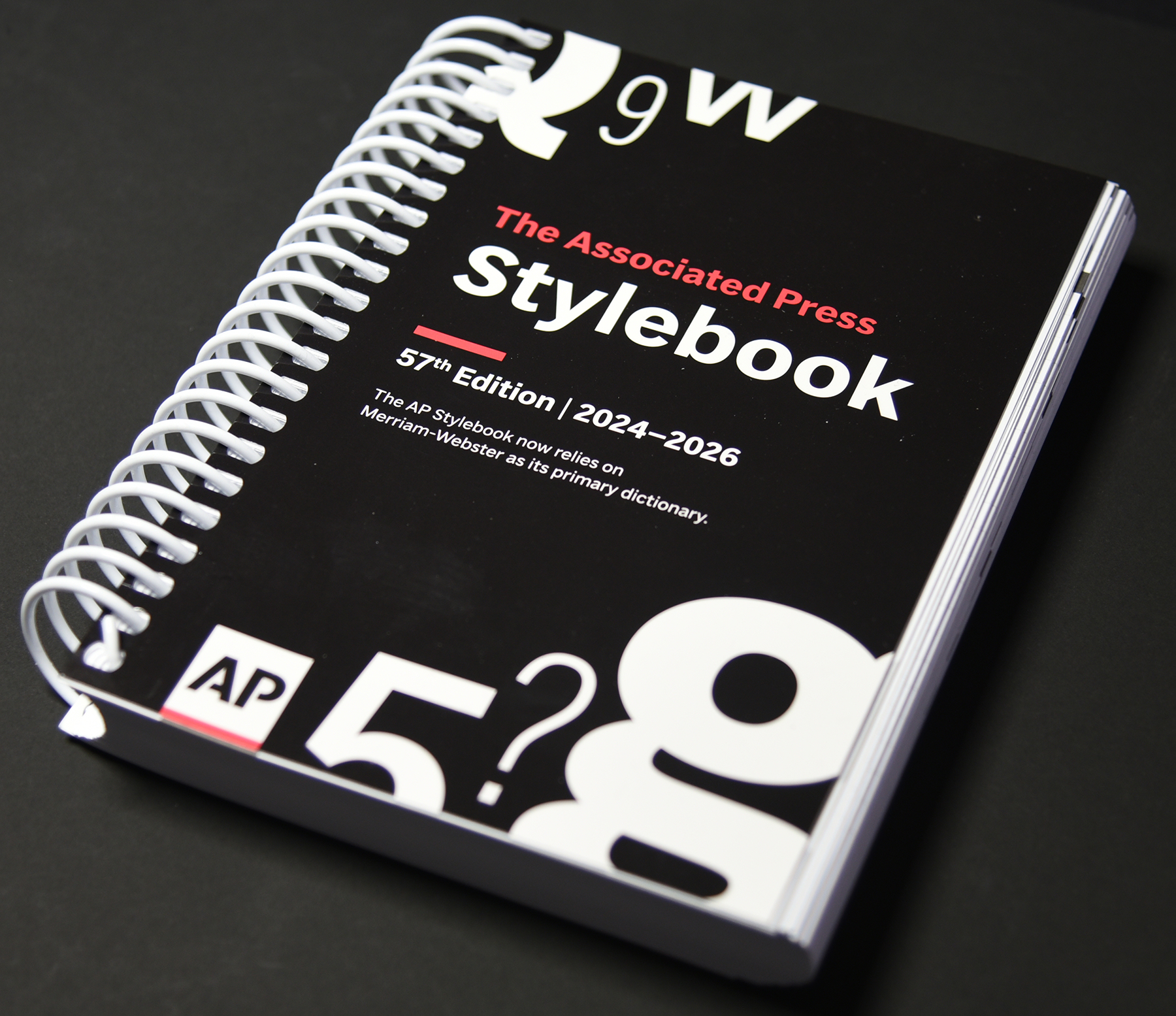
Elsasser: The 58th edition of The Associated Press Stylebook will be out in the spring. Any previews?
Bratton: I’ll give you one big one and one dumb one. We are updating our AI guidance. We are talking to our internal teams, not only about how to write about AI, but how journalists and other communicators can ethically use AI in their work. So that will be updated for the next edition. And then, I spent about three hours the other day trying to figure out why we don’t hyphenate “ping pong.” Merriam-Webster hyphenates it; Webster’s [does too].
I went down a rabbit hole, and I cannot figure out any reason why we don’t hyphenate “ping pong.” I can’t promise it’s going to be in there, but I think that’s probably a good example [of the fact that] we still spend a lot of time on things that some people might not care about. We know that when we come to a conference like this, everybody cares. Everyone would love to talk to us about hyphenating “ping pong,” for as long as we’re willing.
Elsasser: Colleen, what’s your favorite style argument to have?
Newvine: The most common thing that people want to talk about, with deep, fervent passion, is the Oxford comma. Close behind it is: “Why isn’t ‘health care’ one word?” I have had emotional conversations with people pleading their case that we should close up “health care” into one word. I don’t know if that’s my favorite; I’m just used to it. Do you have a favorite?
Bratton: I will tell you, my favorite entry in the Stylebook, which is under “S.” And it’s “Santa Claus.” You can use “Santa” in any reference, but naughty is using “Claus” on second reference. “Mrs. Claus” is acceptable for Santa’s wife, and then it refers you to “Kriss Kringle.” And if you go to “Kriss Kringle,” it actually explains where the name came from, and that it’s not “Kris” with one “s,” because it didn’t come from “Christopher.” You’ll have to look it up in the Stylebook to find out where that word came from.
Elsasser: I still carry AP Style wounds from my college days in Journalism 201. We would have daily pop-news quizzes. I’d have to write articles, and I’d get points taken off for every AP Style error.
Newvine: I had closed-book quizzes. It became memorizing, to my detriment. So now when AP Style evolves, it’s so locked into my muscle memory that I have to unlearn. I have the hardest time remembering. I know we changed “underway” [which AP used to spell out as “under way” unless referring to an “underway” fleet of ships]. I don’t know if we took it from two words to one, or one to two, because I got it beaten into me as a 19 year old. I have to look it up every time.
Bratton: The dirty little secret is that none of us has the whole Stylebook memorized. I look stuff up all the time. If I were on “Jeopardy” and the category was AP Style, I would hope that I had my book or my online version with me.
AP Stylebook Benefits for PRSA Members
PRSA members receive a 20% discount on several of our AP Stylebook products:
- One single-user subscription to the AP Stylebook Online
- One single-user subscription to the AP StyleGuard Pro
- One registration for the AP Stylebook Workshop
- One registration for the online writing course “Write Your Way to Success”
Start using your PRSA-AP Stylebook benefits now.

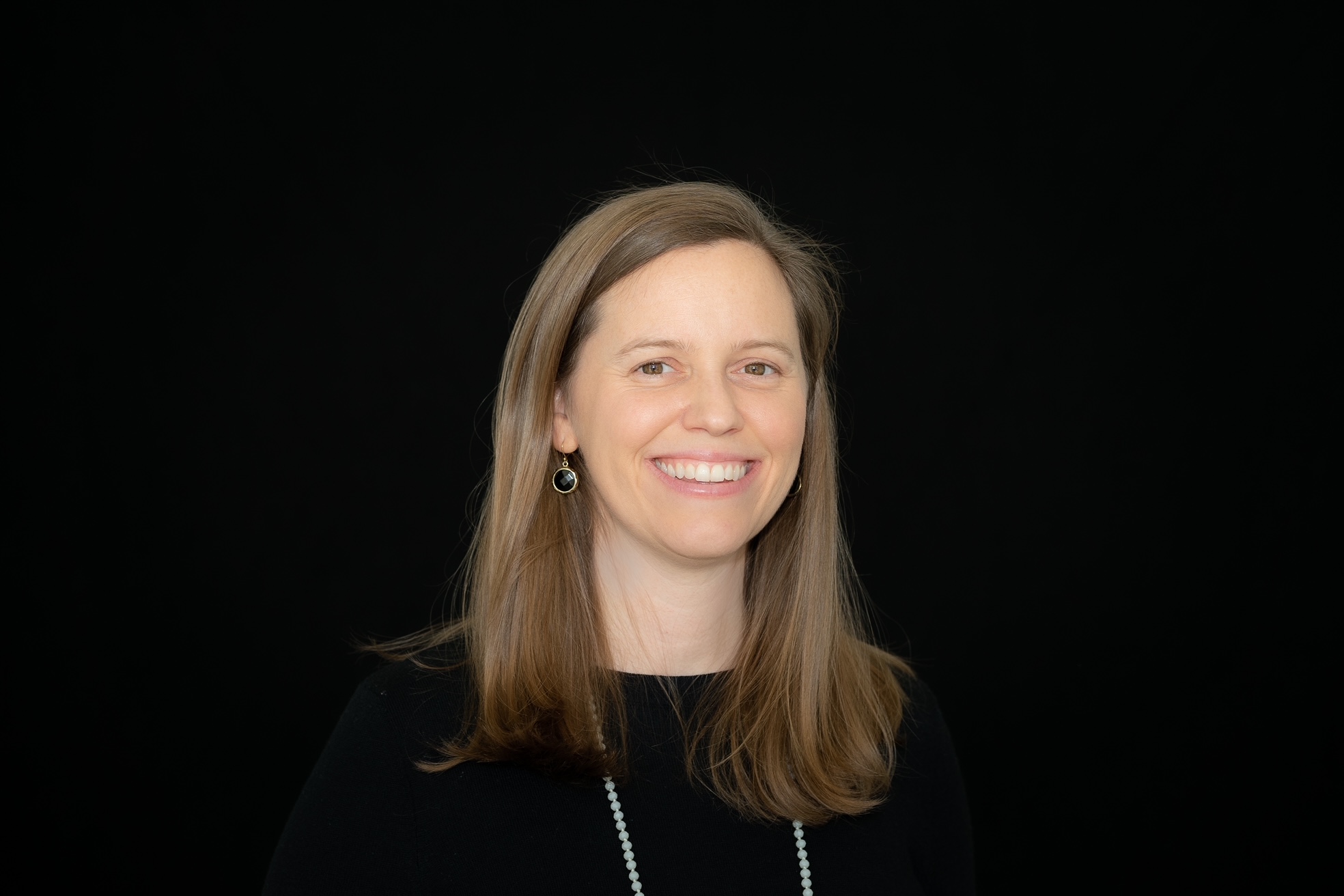
Amy Jacques
Amy Jacques is the managing editor of publications for PRSA. A native of Greenville, S.C., she holds a master’s degree in arts journalism from Syracuse University’s S.I. Newhouse School. She also holds a bachelor’s degree in advertising from the University of Georgia’s Grady College and a certificate in magazine and website publishing from New York University.