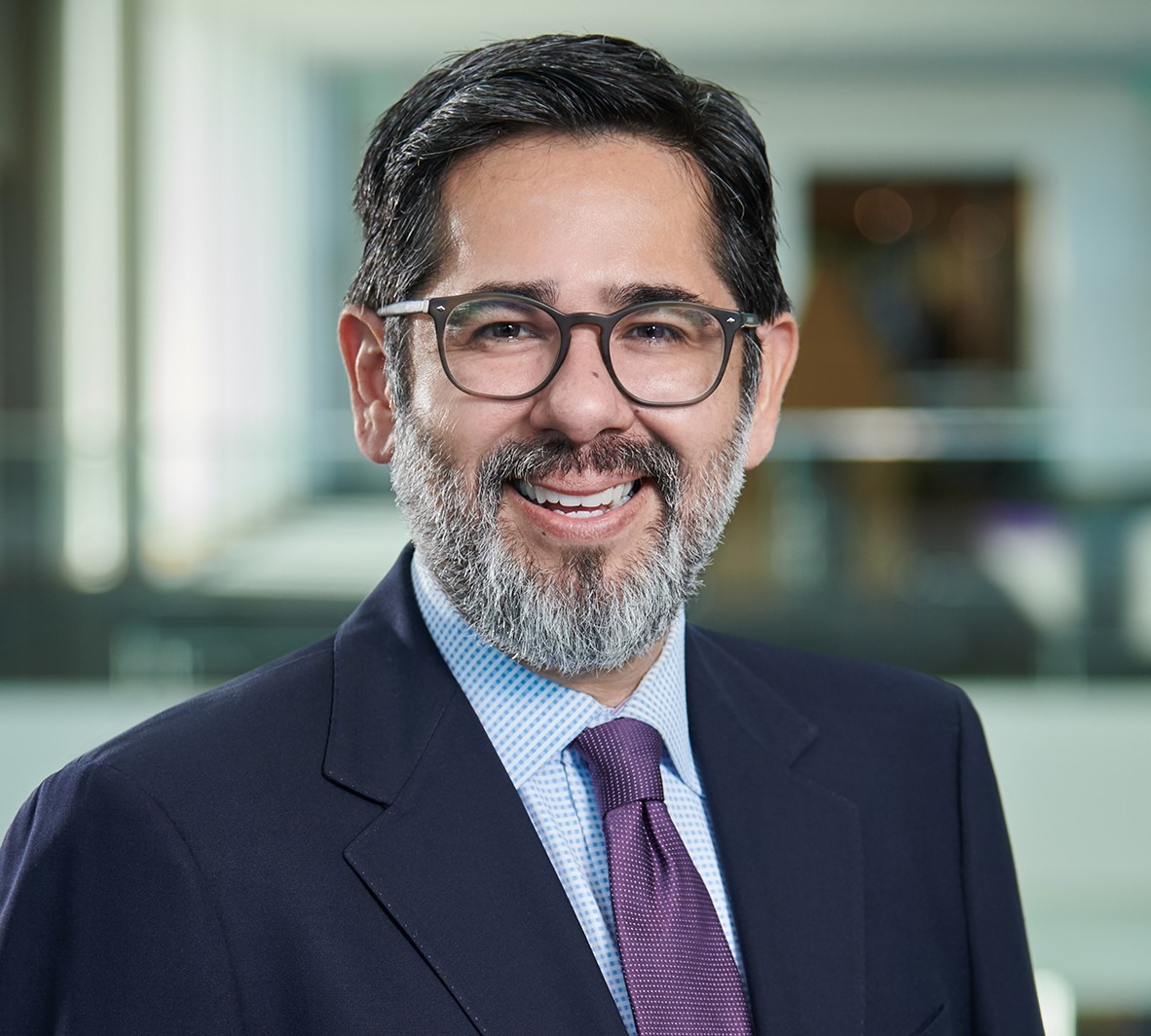




General Mills CCO Jano Cabrera on Building a Career With Purpose
By Ken Jacobs
March 2026
Jano Cabrera has built his communications career at the intersection of global brands, high-stakes moments and deeply personal leadership lessons.
Now chief communications officer at General Mills, with prior senior-level roles at McDonald’s and Burson Cohn and Wolfe, he credits his approach to listening first, expanding his toolkit and constantly pushing beyond “good enough.”
In this Q&A, Cabrera reflects on the leadership principles that guide his work, navigating uncertainty in the modern PR landscape and how communicators can build careers rooted in purpose.
What are the three most important tenets that have guided your leadership over your communications career?
Listen first: Early in my career, coming from a military family, my father advised me that senior leaders should listen before offering their own view. I wish I could say it was a lesson I took to heart from the outset. I learned the hard way that, if leaders speak first, they will unintentionally mute the thinking of others in the room. And that effectively prevents you from hearing the great thinking of others, which can and does come at all levels.
More tools: I often think of the adage, “If all you have in life is a hammer, everything looks like a nail.” Communications is a field where you want to have as many tools in your toolbox as possible. While I certainly draw on the lessons I learned in political war rooms, I’m a much stronger communications professional today because I was curious about and embraced opportunities in brand building, influencer engagement, crisis communications, litigation comms and more. Metaphorically speaking, the more tools you add to your toolbox, the more interesting and varied strategies you can build over time.
Good, better, best: My mother instilled in me the framework, “good, better, best.” It’s a way of pushing yourself, when disillusioned or proud, to reflect on your work and consider what more is possible. It’s easier to do when you’ve hit an obstacle, but I’d argue it’s more imperative to adopt when you are in that moment of celebration. It’s what has pushed me to iterate and learn in a field that I deeply love.
What are the leadership tenets that you most relied on in the last two years, which have proven challenging for the PR profession?
I see the three I just mentioned as fundamental.
There’s a book I was gifted in 2018 that I felt was prescient for the times that would follow. As one black swan event after another hit, I found myself rereading “The Culture Code” by Daniel Coyle.
This one passage struck me: “There’s another dimension of leadership… where the goal isn’t to get from A to B but to navigate to an unknown destination, X. This is the dimension of creativity and innovation.”
There’s so much that communicators have had to navigate in recent years. But I kept reminding myself, and I would encourage others to do the same, when periods without a playbook emerge, that’s a time where no one has the answer.
Unprecedented events, by definition, mean there are no rules to live by, no best practices, no way of searching to see how others navigated these waters. That can be daunting, but looking at it as Coyle does, it can also be liberating, and a period where you can stretch your own creativity and license within an organization.
You spent many years at Burson-Marstellar (now Burson). Which of founder Harold Burson’s leadership truisms guide you, and why?
I had just joined Burson and a new business team was preparing for a pitch. As part of that prep, we were presenting to Harold Burson. I had been with the firm less than a month and was nervous about pitching, working with new colleagues, all of it — and he could tell.
Once everyone was done, he lauded the team, provided some feedback and asked me to hang back, ostensibly to meet and greet a new hire. But really, he was doing a quiet pull aside.
He asked how I was feeling and if I was nervous. He shared that he was always a little nervous himself before a pitch as well, even after all these years. He shared that he always reminded himself that he was in that room for a reason and that the key wasn’t to memorize talking points but to have a conversation rooted in our POV of their challenge, which likely would evolve in the room because that’s what good conversations do.
What I took away from the moment was both what he said and how he said it. He took the time to guide me in a new direction, and he did so gently and with care. I have tried to pay that forward myself over the course of my career.
Is the PR profession doing enough to develop leaders, not just superb practitioners or managers? If not, then what can we do about it?
I’m sure this varies across firms and in-house teams. I’ll go back to the good, better, best framework I referenced above.
Good is that firms and in-house teams understand that there’s a difference between practitioners and what I would call counselors or strategists.
Better is that these organizations have both and the counselors/strategists aren’t limited to the CCO or a handful of leaders at the firm but are instead multiple layers deep.
Best is that these organizations have all the above, and offer HR-supported practices, resources, training, mentoring and more to ensure that the most talented practitioners, even at entry-level positions, have clear pathways up to becoming strategists or counselors — and ideally, there are examples of that happening at the company or firm.
What’s something about Jano Cabrera that we wouldn’t know from your LinkedIn bio?
I’m a runner and I made the decision to finally run not one, but two marathons in 2025. I’m certainly proud of that and I’d argue it provides employers a better sense of who I am as an individual, given the sheer amount of training and discipline required. But yeah, I’ll fully admit that it’s an odd bullet to add to a résumé.
I’d rather highlight something important that is on my LinkedIn. I’m a passionate advocate in helping find a cure for ALS, more commonly known as Lou Gehrig’s disease.
Unfortunately, this is a personal mission. Brian Wallach, a close friend, was diagnosed with ALS in 2017. For those who don’t know, ALS is a disease that can affect anyone. It doesn’t discriminate. Anyone can be diagnosed. And once they are, it’s always fatal. I don’t believe ALS is an uncurable disease. I believe it’s an underfunded one.
Tying this to our broader conversation, I would encourage communications practitioners and strategists to reflect on how they might apply their passion in spaces beyond their workplace. While we all have day jobs, we are all part of a wider community and life is better if we use our gifts to make that place a better place to the best of our ability.
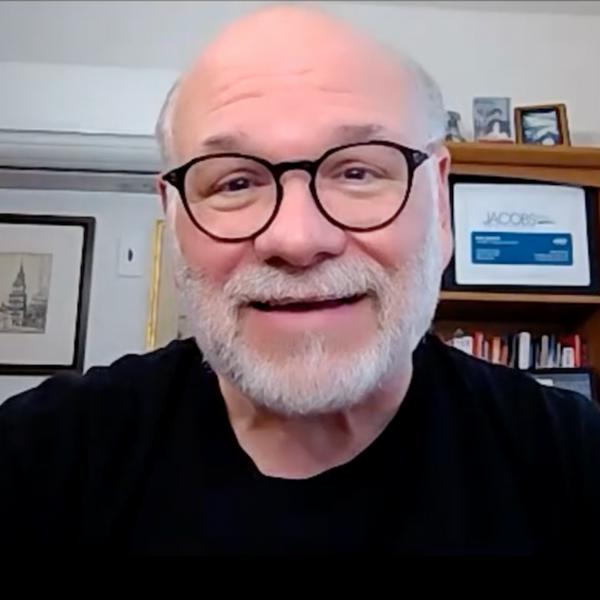
Ken Jacobs
Ken Jacobs is principal of Jacobs Consulting & Executive Coaching. Visit his website (www.jacobscomm.com) and contact him by email (ken@jacobscomm.com). He is a Professional Certified Coach (PCC).