



How a Small PRSA Chapter Team Made a Large Impact
By Steffon R. K. Campbell
October 2026
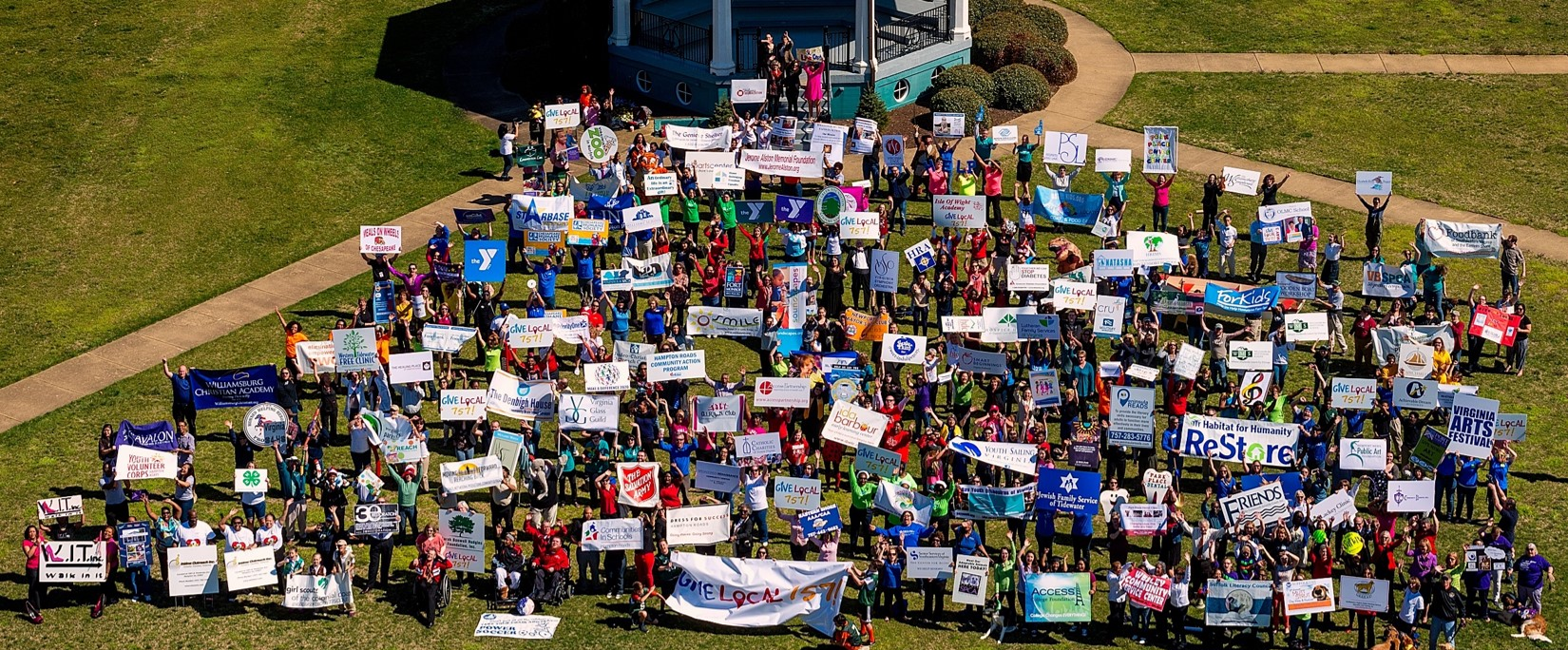
When a giving day succeeds, the entire community wins. That win feels even better knowing that a small team of practitioners, through quick alignment, partner readiness, media timing, and a plan could help a community foundation with another record-breaking year.
That’s what happened when we, the PRSA Hampton Roads Public Service Committee, decided to support the Peninsula Community Foundation (PCF) for Give Local 757 giving day this past May 5.
The Hamptons Roads community came together and raised a record $1,637,538 from 17,075 donations, with one person giving a whopping $50,000 and another donation being matched with $100,000.
Our team had one job: Provide strategic, pro bono communications support that PCF could execute quickly, while keeping the spotlight on the nonprofits that power Hampton Roads. We wanted to make sure these amazing organizations stayed in the spotlight, and our role was to help make that happen. But why PCF?
Why we said yes
The committee saw three main reasons to support PCF.
First, Give Local 757 aligned with our public service mission of helping nonprofits across Hampton Roads build visibility, attract donors and strengthen their ability to serve local communities.
Second, they presented defined communication needs and a clear deadline, which allowed us to establish our own S.M.A.R.T. goal for the project.
Third, the partnership created a professional development opportunity where PRSA members could collaborate outside their workplaces, while PRSSA students from Old Dominion University and Hampton University could contribute to a live campaign under professional supervision.
Once we agreed on the partnership, we followed a five-step model that we believe other chapters can adapt.
Step 1: Define the scope
Public service, much like our professional lives, requires more than excitement to be effective. Especially with tight deadlines. For us, that deadline was May 5, roughly two months after establishing our partnership with PCF.
We began with a one-page scope that clarified three goals: increase nonprofit participation, increase PCF’s visibility in traditional media ahead of May 5, and strengthen consistent messaging and content amplification across channels.
From there, we organized the work into work streams with leaders for each task such as reaching out to nonprofits, working with traditional media, coming up with messages and writing copy, creating social media content and tracking metrics.
That structure did two things immediately: 1) It reduced decision friction (“Who owns this?” became obvious). 2) It protected our team from being overwhelmed by routing requests through clear lanes.
Step 2: Organize volunteers into work streams
A small committee cannot function efficiently when every request goes to everyone, so we divided the work into six lanes: project coordination, nonprofit outreach, traditional media, messaging and copy, social media and content, and metrics and reporting.
Each work stream had its own lead while the project coordinator maintained the task tracker, documented decisions and followed up on dependencies. However, other leads were still able to make progress without waiting for the entire committee to meet.
This structure reduced decision friction and made recruitment easier because members could select work that matched their expertise and availability.
Step 3: Build an execution rhythm
Volunteer teams need a lighter structure than agencies, but they still need a rhythm.
We used short weekly check-ins every Thursday, a shared task tracker and direct communication between work stream leads and the client point person.
We also prioritized usable deliverables over lengthy strategy documents. The committee developed a media advisory template, talking points, impact stories, social media recommendations and four short-form videos that could be used across different platforms.
Under a tight deadline, it is important to give the client tools it can deploy. A clear pitch, approved talking points or a ready-to-post caption often creates more value than a long presentation.
Step 4: Extend existing media assets
PCF already had a strong campaign platform and an established broadcast sponsorship. Our committee did not try to replace those assets. Instead, we identified gaps and extended the campaign’s reach.
The traditional media team pitched outlets outside the primary sponsorship footprint, including competing television stations, radio and regional publications. The team also drafted and pitched a guest column that earned Sunday placement in The Virginian-Pilot and Daily Press.
Audit what the client already has before proposing more. Direct volunteer effort toward uncovered audiences, formats or outlets.
Step 5: Measure outputs and outcomes
Pro-bono teams sometimes treat measurement as optional because no invoice is attached. That is a mistake we as a committee tried not to make.
We assigned a metrics lead and tracked coverage, audience reach, publicity value, content outputs and nonprofit participation. Those measures complemented the campaign outcomes of funds raised, donations processed, matching funds unlocked and prize money distributed.
Measurement helped PCF demonstrate the partnership’s value. It also gave the committee evidence for chapter reporting, member recognition and future award submissions.
Challenges and lessons learned
The short runway created the biggest challenge. Volunteers balanced the campaign with full-time jobs, academic responsibilities and other commitments. Clear ownership helped, but we also learned to flag dependencies early. A delayed approval or missing data point can affect several work streams at once.
We also had to avoid duplicating PCF’s internal work or its sponsors’ efforts. Regular communication with the client point person allowed us to supplement the existing campaign instead of creating parallel strategies.
Finally, not every good idea belonged in the final plan. The deadline required us to distinguish essential deliverables from attractive extras. That discipline kept the team focused on work that could influence participation and visibility before May 5.
What other Chapters can replicate
Chapters do not need a large committee to create measurable impact; they need a qualified client, a defined deadline and a disciplined operating model.
Choose a project that aligns with the chapter’s mission and presents a clear communications problem. Create a one-page scope. Divide the assignment into work streams with named leads. Establish one approval path, one shared tracker and a predictable check-in schedule. Produce deployable materials.
Finally, measure communications outputs alongside organizational outcomes.
The model can scale for a giving day, community event, awareness campaign or nonprofit launch.
The value beyond the metrics
While the numbers show the campaign's enormous reach, they don't capture the full experience. The partnership gave PR professionals an opportunity to use their expertise for an immediate local purpose, learn from peers, mentor students and see a direct connection between communications and community resources.
PCF described the collaboration as “the absolute highest standard of public relations professionals driving measurable civic value.” That recognition affirmed the committee’s approach, but it also underscored a broader point: Public service is not separate from professional excellence. It is one of the clearest ways to demonstrate it.

Steffon R. K. Campbell
Steffon R. K. Campbell is a Teaching Assistant Professor at the Old Dominion University in Norfolk, Virginia, published author and freelance journalist. He currently serves as the chair of the PRSA Hampton Roads Public Service Committee.