



How This PRSA Chapter Uses Music for Engagement
By Dr. Sarah Maben, APR
May 2026
PR practitioners singing at Chapter meeting?
It happened at the March program for PRSA’s Greater Fort Worth Chapter. Attendees “named that tune” in an interactive session connecting music to recent public relations research.
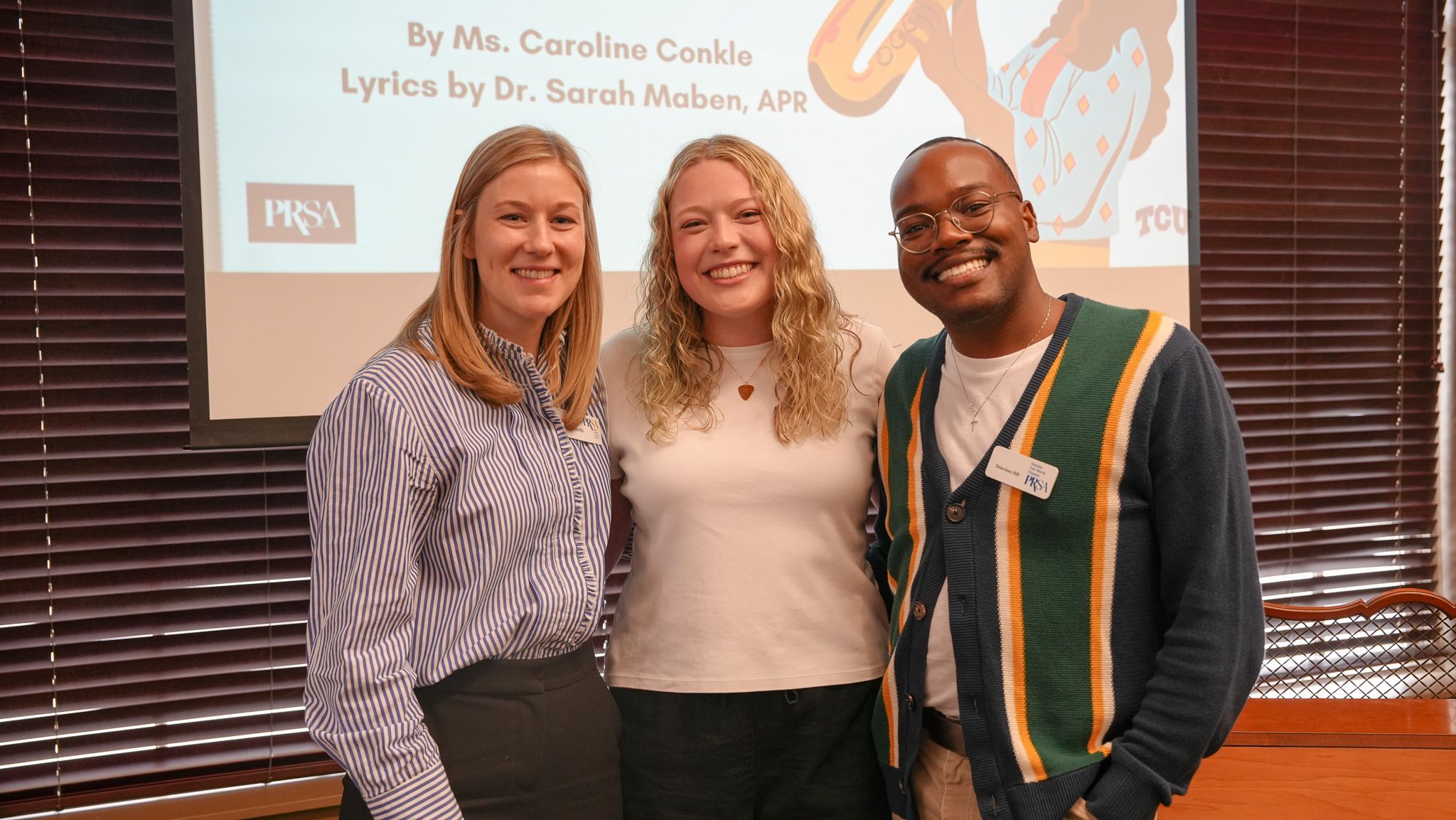
Caroline Conkle, the speaker, paired songs with key research concepts from recent academic PR journals. The idea was to make research approachable and fun, using prediction and music. Imagine Dolly Parton’s “9 to 5” nail clicking intro and her voice kicks in: “Workin’ nine to five, what a way to make a livin.’” What PR concept could this song represent?
If you guessed workplace wellbeing, you are correct. Conkle then explained how 300 PR practitioners from 34 countries contributed to a 2025 study about workplace well-being from Nicky Garsten’s team at the University of Greenwich.
Bosses who undervalue PR, ethical conflicts, and insufficient recognition make PR especially hard. Many pros struggle to find meaning and purpose. Then, Conkle shared practical takeaways for implementation.
“Caroline made learning fun by incorporating music and pop culture,” Kim Brown, APR, co-founder of Story and Strategy, said. “It also drew out the opinions of different age groups in the room, from Gen Z giving their perspective on audience behaviors to senior-level practitioners talking about their experience. Everyone walked away from the presentation with a lot of information and a great break in their day.”
A music-plus-prediction approach
The musical element was a way to engage attendees, and prediction was a technique to prime their thinking. Dr. Rebecca Putman, a teaching and learning expert at Texas Christian University, said that audiences become emotionally invested in whether their prediction is correct and are engaged and motivated to learn.
This music-plus-prediction approach can be replicated for department meetings, PRSA Chapter meetings, and the classroom. The first step is to identify new research and trends to present. For the Fort Worth presentation, we drew on our own studies and recent articles in academic journals. The goal was to translate findings for a practitioner audience. Industry publications and reports are other places to consult for trends and updates.
The importance of key findings and takeaways
Next, boil the articles down to their main findings. In one study, we investigated how nonprofit and public sector communicators were using generative artificial intelligence in their work.
The top findings were that most communicators jumped into GenAI on their own, with very little planning, scant training, infrequent discussions with colleagues, and no usage policies. Will Smith’s “Wild, Wild West” was playing in the background. “The Lone Ranger” theme song would have worked, too.
Key takeaways were identified and presented after the findings. One recent academic article suggested using influencers as listening agents alongside content creators. After playing Miley Cyrus’ “The Climb,” Conkle explained her nano-influencer role as the founder of Bands of DFW, and how she connects bands, venues and artists through her listening.
A word about songs
Song selection is tricky. Diversifying genres and time periods helps audiences connect regardless of their Spotify Wrapped reports. Aim for recognizable songs or singers. Cruise playlists by search terms or use generative artificial intelligence to supply options.
Conkle’s TCU undergraduate students tweaked early ideas that were too obscure. They suggested songs by the Beatles (“Come Together” for an article on internal communication) and Dolly Parton that resonated with the audience. Posting the album cover, band name, and lyrics on slides helped listeners connect with the songs even if they did not recognize the audio.
The room’s audio/visual capabilities will impact how to approach the music and should be scouted before the meeting. Conkle brought a wireless Positive Grid Spark MINI guitar amp to amplify the sound. Conkle shared snippets of the songs via her phone over the speakers from pre-arranged playlists.
Audiences may need a warm-up to get their brains and vocal cords ready. Clear instructions on a slide help: “Name that Tune — I am going to play you a song, and you are going to predict how it ties to a current PR trend from research.” Start with easier songs and studies. Audience members will catch on and make harder connections as the presentation continues.
“The atmosphere was energetic, proving that when you combine interactive elements like music with industry research, the engagement follows naturally,” said Sydney Hanes, Chapter president and public relations manager for Cook Children’s Health Care System. “Caroline demonstrated how to make complex data accessible and actionable for practitioners at every career stage.”
Bridging research and practice, Conkle asked attendees to work in table groups to identify things they wished researchers would address or answer for them. Next, she encouraged them to select songs that could be used to predict that concept. One brave singer started singing “It’s goin’ down, I’m yellin’, timber, you better move, you better dance,” and the whole room joined.
“`Timber’ by Kesha is a great comparison to crisis communications because when something happens, as PR people we have to yell TIMBER and everyone else better move and/or dance to get out of the way and to the other side,” said singer Detavious Hill, marketing and communications manager at Key School and Training Center.
To conclude the meeting, Conkle asked the tablemates to devise a mash-up of songs that summarized the meeting. They could work as human-brain-only or partner with AI. Providing inexpensive prop microphones might incentivize would-be backup singers to take the stage. This model is ripe for riffs and customization for specific audiences.
Help for Naming That Tune
Here are steps to implement a similar program for your event:
- Identify research and trends to present
- Trim articles down to their main findings (one or two)
- Select one or two key takeaways that audiences could implement quickly
- Pick songs that speak to the findings
- Ask attendees to predict the PR topic based on the song
- Share the related research findings and how they tie to the song
- Provide takeaways
- Repeat for 3-5 songs, depending on your time (each vignette took about 5 minutes)
- Ask volunteers to belt out their tunes
- Capture the gold for sharing on social media

Dr. Sarah Maben, APR
Dr. Sarah Maben, APR, is an assistant professor in the Strategic Communication Department at Texas Christian University’s Bob Schieffer College of Communication. Her research focuses on public relations, AI, organizational listening, social media and experiential learning.