



Inside Lenovo’s 2-Month Communications Sprint Across 3 Major Sporting Events
By David Hamilton
October 2026
I covered breaking news, wildfires, hurricanes, and every sporting event possible during my time as a journalist. And yet, nothing from my decade in journalism– or the last 13-plus working in PR and corporate communications — could have prepared me for the delightful chaos of the past two months.
During that stretch, my team helped carry Lenovo through three of the biggest global sporting events — nearly back-to-back. It began in late May, when our communications team was on the ground in Montreal for the Formula 1 Lenovo Grand Prix du Canada.
Weeks later, the NHL’s Carolina Hurricanes, who play in the Lenovo Center in Raleigh, NC, won the 2026 Stanley Cup, their first in twenty years. And running underneath all of it was the FIFA World Cup 2026, the largest in the tournament’s history, with 104 matches played across the United States, Canada and Mexico.
Lenovo is an official partner for each of those organizations and my team’s job as communicators is to tell how our technology is helping enhance the fan experience in each of those sports. But as the calendar would have it, we had to do it all simultaneously.
F1, the Stanley Cup and the World Cup, all inside of two months!
The red-eye that explains my job better than any title could
Let me tell you about one 24-hour stretch, because it captures modern communications work better than any job description I could write!
On a Friday afternoon in June, I was in Seattle for a World Cup match — hosting journalists and making sure our North America president was ready for his media interviews before we headed over to the stadium to watch USA vs. Australia.
Late that evening, he and I caught a red-eye and landed in Raleigh at 5:40 a.m. on just a couple hours of sleep because days earlier, the Carolina Hurricanes had won the Stanley Cup and Lenovo holds the naming rights to the building where the hockey team plays.
After a quick 30-minute nap at home, I headed over to the championship parade. Our North America president is a charismatic guy and has an internal video series where he gives our employees a behind-the-scenes look at his work travels.
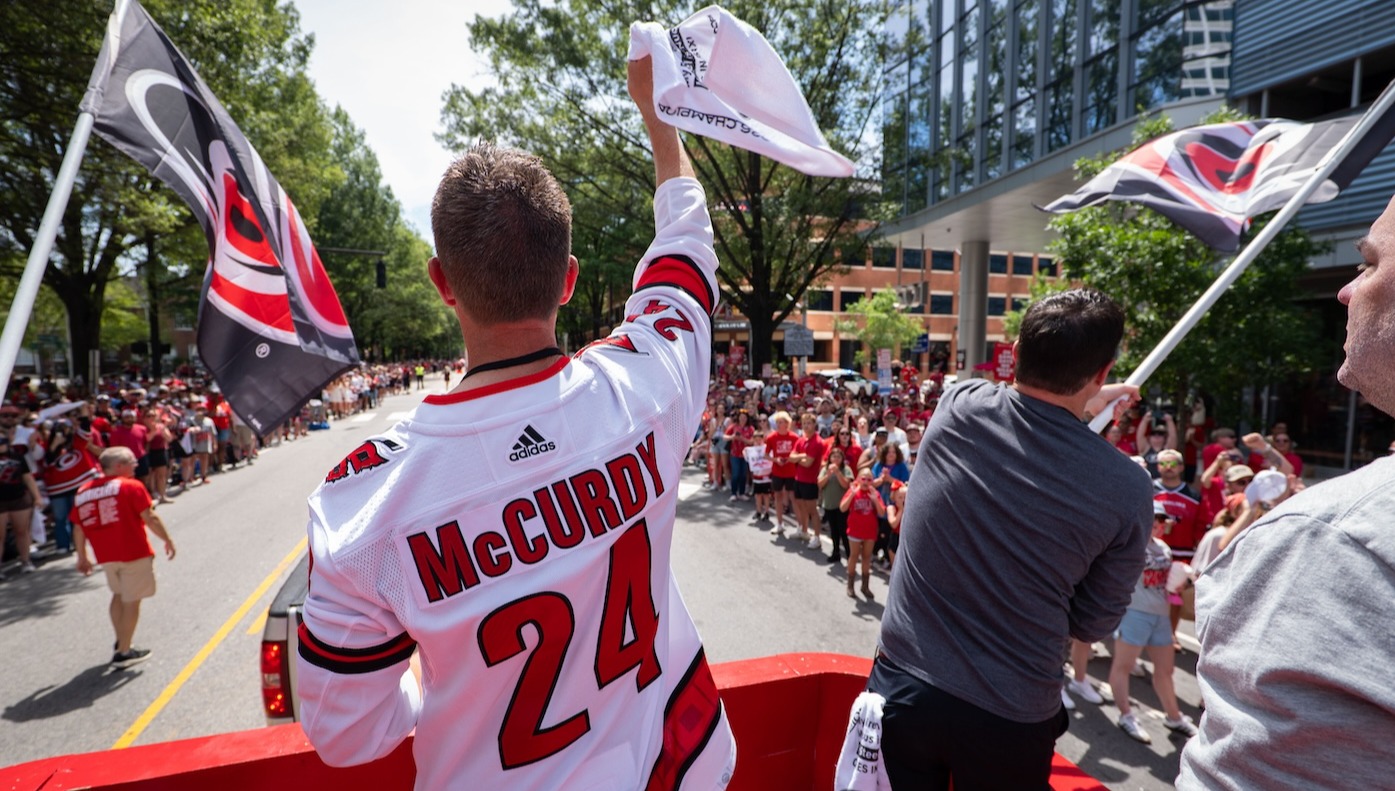
I thought my team and I would just be shooting a quick video that morning with the president and the Canes executive leadership — but they invited us to join the parade! We ended up riding a float through downtown Raleigh, waving a flag to a sea of nearly 200,000 red-clad Caniacs celebrating a title 20 years in the making.
What made that sprint possible wasn’t adrenaline or an energy drink. It was a team working behind the scenes so we could seize the moment.
While I was in the air, colleagues were already on the ground in North Carolina handling logistics. The feats that look solo from the outside are almost always a team working in parallel — so one person can turn up in two cities in twelve hours.
A two-month relay across a dozen cities
The only way to survive a stretch like this is to run it as a relay. A handful of us would deploy to a host city while the rest of the team planned the next event.
Then we’d rotate: The planners went on-site, and those of us coming off the road picked up the planning for whatever came next.
Across the World Cup, we hosted media and prepped Lenovo spokespeople at matches in Los Angeles, Seattle, Dallas, Miami, Toronto and at MetLife Stadium in New York/New Jersey, and we worked alongside our Lenovo colleagues in Mexico to support a match there.
In Dallas, we took reporters behind the scenes at the FIFA International Broadcast Center. In Miami, we gave journalists a look inside the tournament’s Technology Command Center. At one point, I worked 21 days straight and 27 of 28. But so did my team. We were tired, but we were also energized by this once-in-a-career opportunity.
Technology you could see on the pitch
Part of what made this story easy to tell is that Lenovo’s technology showed up in moments fans actually noticed. As FIFA’s official technology partner, Lenovo ran through nearly every layer of the tournament, from operations to broadcast to the fan experience.
For the 48 competing teams, Lenovo and FIFA built FIFA AI Pro, an AI-powered analysis tool built on FIFA’s historical data. It scours millions of data points, analyzes over 2,000 different metrics, and delivers rapid insights within reach of every team, not just the ones with the biggest analytics budgets.
Fans got a new view of the game through Referee View, a camera worn by the on-field official. Footage from a running referee is almost unwatchable on its own, so Lenovo used AI to steady the picture — removing roughly 60% of the camera shake so viewers could feel like they were in the middle of the play instead of strapped to someone’s shoulder.
These tangible examples of how our technology is improving the games and sports we all love to watch make it easier for my team of storytellers to do what we do best — tell stories that stand out from the crowd. Being a sponsor of a large sporting event, that’s impressive. But having a direct impact on the way the game is played and watched? Now that’s newsworthy!
Different sports, different muscles
Even within one corporate communications team, these moments demanded very different things. The World Cup is global and enormous — dozens of media markets and a spotlight so bright that every executive touchpoint has to be airtight. Lenovo Center is deeply local: community pride, a fan base that waited two decades, and our name on the building where it finally happened, in a state where Lenovo has one of its two global headquarters.
Managing it all worked only because I wasn’t managing it alone. Someone was always thinking two cities ahead of wherever one of us physically was, which is the only reason I got to be the person on the float instead of the person stuck at the airline gate.
Getting leaders ready for the moment
A big part of our job is less visible than the pitch or the parade: making sure our leaders and spokespeople walk into these high-impact moments prepared. Whether it’s a stakeholder conversation at a World Cup match or a media roundtable trackside at F1, executives need context, tone and confidence.
My journalism background helps, but I lean on colleagues who bring their own expertise in message development, issues management and event planning, so our executives never walk in blind. Prep is a team sport long before it’s a solo performance.
Why it matters
I doubt our team will ever have another stretch quite like this: sprinting between a Grand Prix, a hometown parade, and a global tournament, sometimes overnight. Our industry loves an individual “brand moment,” and this year we got to live one almost too perfect to script.
But the takeaway isn’t the glamour of the float or Messi scoring a goal with our logo in the background. It’s that none of it happens without a team that has your back at 30,000 feet — a group that thought through every detail, from strategy to tactics to logistics, and executed an extraordinary run without missing the puck, committing a penalty, or blowing a tire.
For those of us in corporate communications, a stretch like this is a reminder of why we got into the business: not just to manage a message, but to help tell a story people actually care about — whether they’re watching from a stadium in Seattle or waving back from a sidewalk in Raleigh.
More than anything, though, these past few weeks leave me grateful — for the work, and for a tenacious world-class team!
David Hamilton
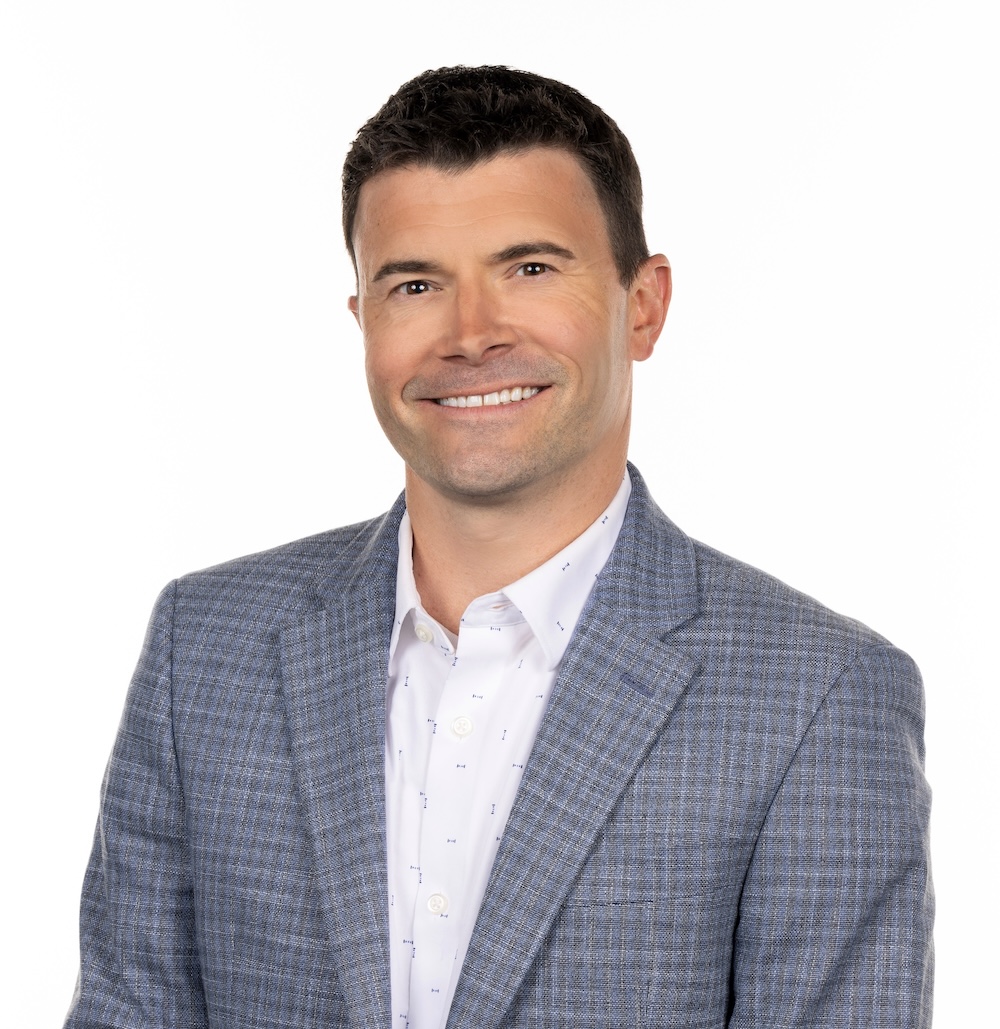
David Hamilton is a communications expert with a proven track record of developing strategic PR campaigns that build brand recognition, increase awareness, and generate favorable media coverage. He currently leads the Lenovo North America Communications team responsible for public relations, internal and executive communications, channel/reseller communications, social media, and video production.