




The Future of B2B Thought Leadership in a Zero-Click Era
By Heidi Modarelli-Frank, APR and Cami Clarke
April 2026
The Zero-Click search phenomenon brought about by AI-generated search results now accounts for about 80% of all Google searches — and that percentage continues to grow.
This lopsided trend would seem to spell the end for many content-based endeavors, including B2B thought leadership. After all, if most users are reading only the AI summary, why should any company invest in creating content?
These would be hasty and unfortunate conclusions for B2B companies, however, because their audience is a distinctive subset defined by the depth of content they seek when researching products and solving problems. For the most part, they are not part of the larger Zero-Click audience.
If anything, AI-generated search is creating more opportunity for thought leadership, not less, but it is also placing more demands on content creators.
B2B audiences are still the same
What you instinctively know about B2B audiences is still true. B2B readers, like everyone else, are taking advantage of new tools and AI-generated search Overviews. But their underlying tendencies remain the same.
B2B readers tend to:
- Use More Channels: McKinsey’s 2024 B2B Pulse finds that B2B buyers use about 10 different interaction channels in a typical journey.
- Spend More Time Reading: B2B decision-makers spend an hour or more weekly reading thought leadership pieces, and nearly three-quarters find this content to be more trustworthy than marketing materials, according to a 2024 LinkedIn and Edelman study.
- Click More: According to 2025 research by TrustRadius, 90% of B2B readers click through to the sources or citations behind AI Overviews.
- Value High-Quality Thought Leadership: B2B readers are discriminating. They rate most thought leadership as good but only 15% as good or excellent, according to the LinkedIn and Edelman study.
These findings leave no doubt as to the importance of high-quality thought leadership in the age of Google AI Overviews and AI tools like ChatGPT, Microsoft Copilot and Perplexity. The chief question for B2B companies is not whether to give up on thought leadership, but how to ensure AI search engines are finding and serving up their thought leadership content.
Anatomy of search results
Before delving further into how AI Large Language Models (LLMs) work, we need to understand the anatomy of a browser-based B2B search results page.
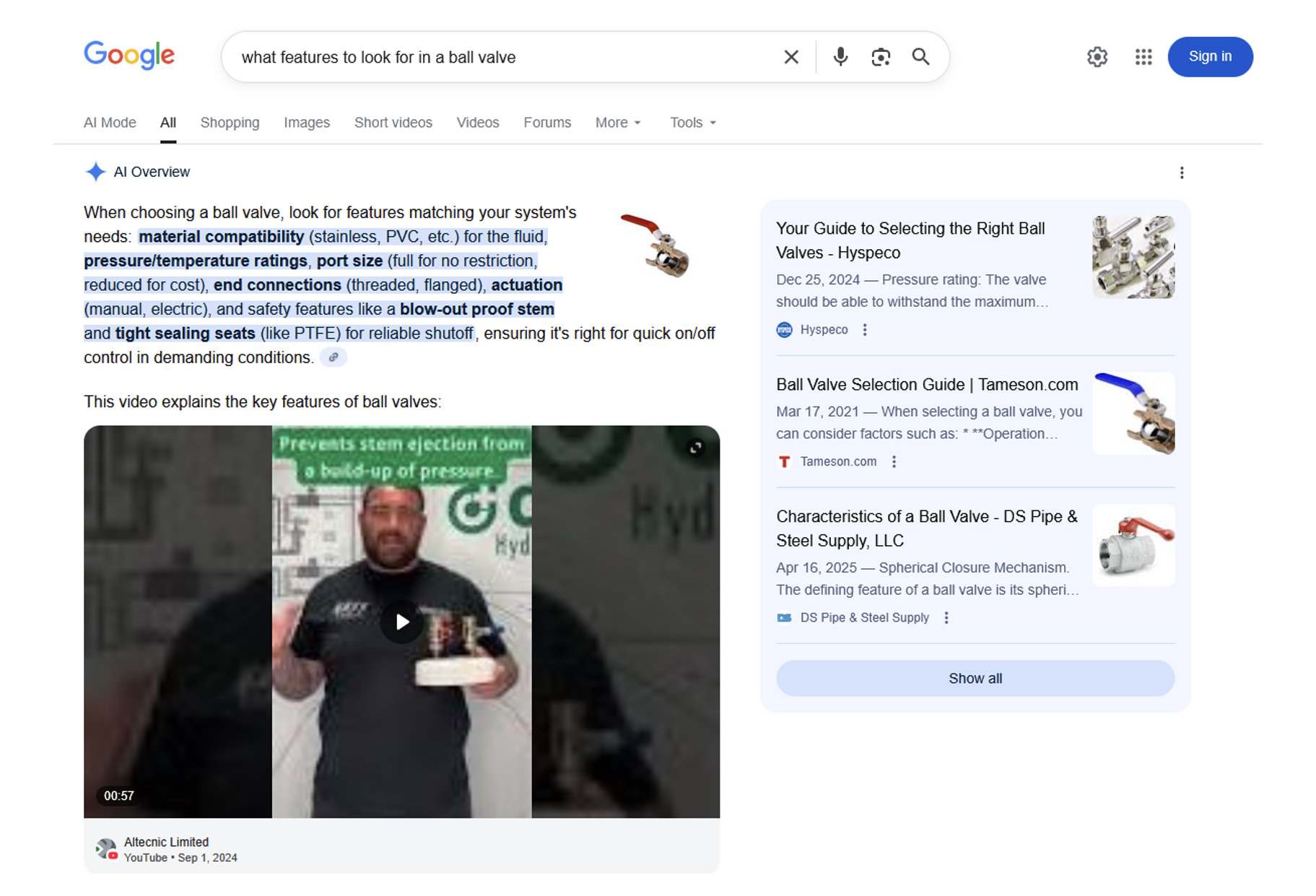
That page will look different depending on your browser and search engine and whether you’re logged in or not, but for most informational inquiries, you’ll find four categories of content:
- Google AI Overviews. Typically, these appear at the top of the page and provide a summary response to your search inquiry, drawing on many sources across the internet.
- Citations. These are the sources on which the Google AI Overview is based. They show up in two forms: as hyperlinks in the Overview and in a list below or to the right of the Overview.
- Sponsored Content. These paid placements (or ads) show up based on keyword bidding, relevance and the quality of content and have a subtle “Sponsored” label.
- Organic Content. Traditional non-paid search listings also appear as they always have, in a list following any sponsored content – and now also below or above Google AI Overviews.
In addition, B2B readers can perform the same searches using stand-alone AI platforms. They’ll get similarly structured summaries with clickable citations, but without traditional organic search results.
Search rankings then and now: What’s changed exactly
The LLMs that generate AI summaries and citations do not operate in the same way as Google algorithms that generate sponsored and organic content rankings. There is an air of mystery around both LLMs and Google algorithms, but we can compare the results they produce.
For example, if a page ranks well in traditional search, it may also rank well with LLMs. For example, LLMs cite pages in organic search positions 1 to 5 more often than pages ranked in organic search positions 6 to 20, according to a Semrush study.
However, that study also finds that most LLM citations come from pages with organic search positions of 21 and greater. In fact, ChatGPT draws 90% of its citations from pages in these low-ranking positions. Why is this?
Simply put, LLMs and Google algorithms are evaluating sources using different criteria, even if there is some overlap. LLMs are searching for specific pieces of information, whereas traditional search algorithms are evaluating whole webpages. LLMs venture beyond websites in the highest organic search positions because they need to draw on the largest pool of data possible.
What you can do now
In response to this complex and rapidly changing search environment, here are five things you can do to ensure your thought leadership content is being seen and cited:
- Stick with traditional SEO best practices. Traditional search rankings help you earn citations in Google AI Overviews. So, continue to match your content and keywords to search intent, maintain proper HTML practices and publish fresh stories.
- Publish widely. LinkedIn and YouTube are among the top domains cited in Google AI Overviews. Publish your content there, on social media and in trade publications to raise your visibility, credibility and authority in the eyes of LLMs.
- Write with search queries in mind. Because LLMs are searching for discrete pieces of information, allow your content to be specific, detailed and in-depth. Anticipate the questions your buyers may ask and address them with specific use cases.
- Practice content proliferation. Content proliferation is the art of creating many pieces of content addressing the same locus of information. If you have a longer white paper, break up the same content into a blog; create videos or slides; and develop checklists, FAQs or charts comparing key benefits.
- Obsess about structure. Publish content with concise summaries and a clear hierarchy of headings and subheadings. Whenever possible, use bulleted or enumerated lists and short paragraphs. As a check, scan your content pages to ensure the structure advertises a clear, logical flow.
Staying on the AI shortlist
Thought leadership is here to stay — and may be in its golden era because its role is so central to AI summaries. AI magnifies its importance and provides B2B readers with a clear index of which companies are providing the expertise. The list of citations associated with AI summaries is essentially a roadmap for those who know the most.
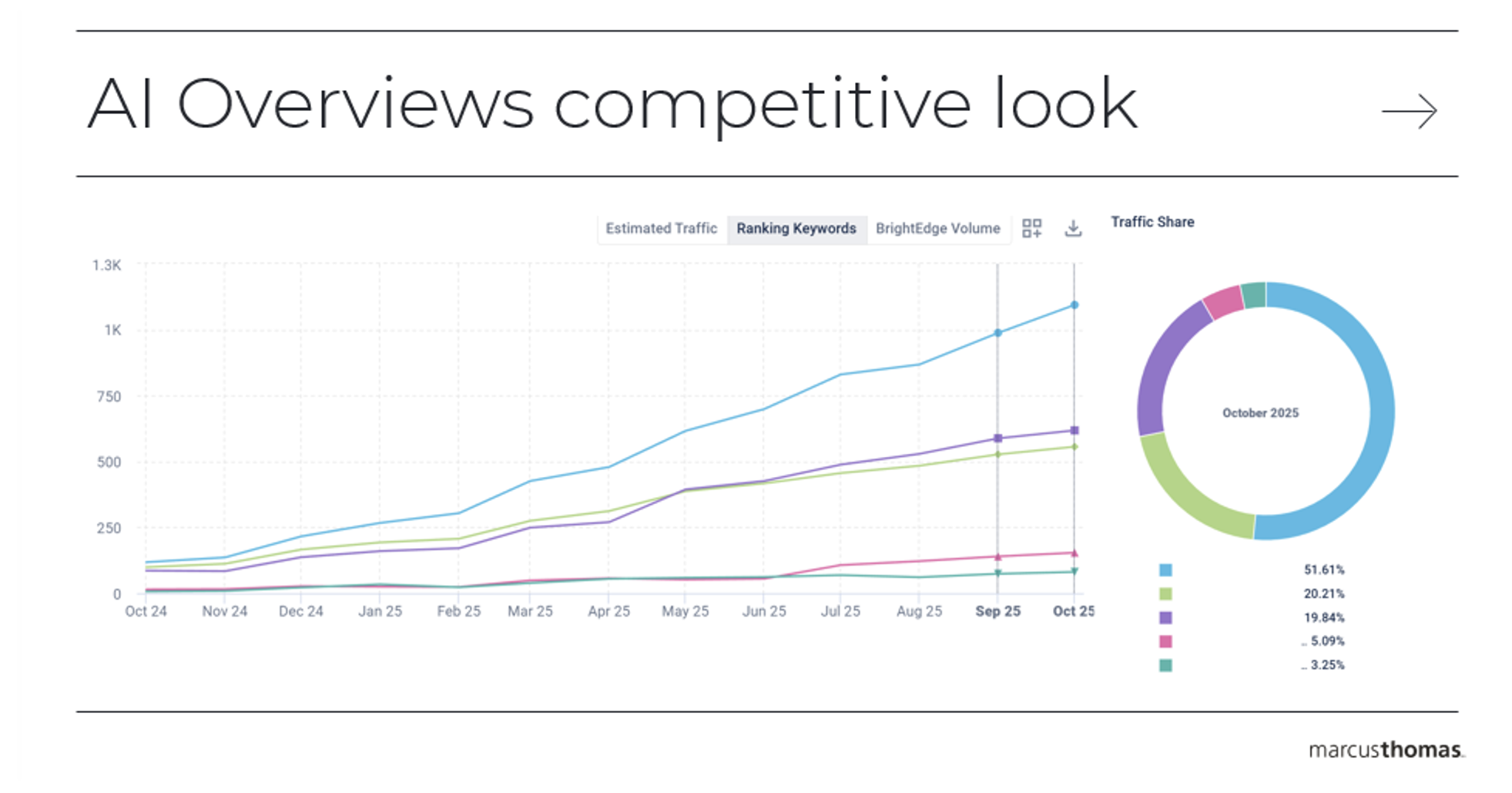
As you build and reconfigure your content program to accommodate AI search, you can monitor your progress through integrated SEO tools with AI visibility features, such as BrightEdge and Semrush. For example, these tools can provide estimated traffic from AI-mediated searches, AI Overview citation rankings vis-à-vis your competitors, and brand sentiment relating to AI tools. As part of your content team, it’s helpful to have someone who understands the intersection between SEO and AI and can assist you in evaluating your progress in gaining prominence in AI search results.

Heidi Modarelli-Frank, APR
Heidi Modarelli-Frank (HModarelli-Frank@mtllc.com), APR, is a partner and chief relationship officer at Marcus Thomas LLC.